

Student Loan Servicers Issue New Repayment Guidance for 2026 Borrowers

March 2026 — Financial News
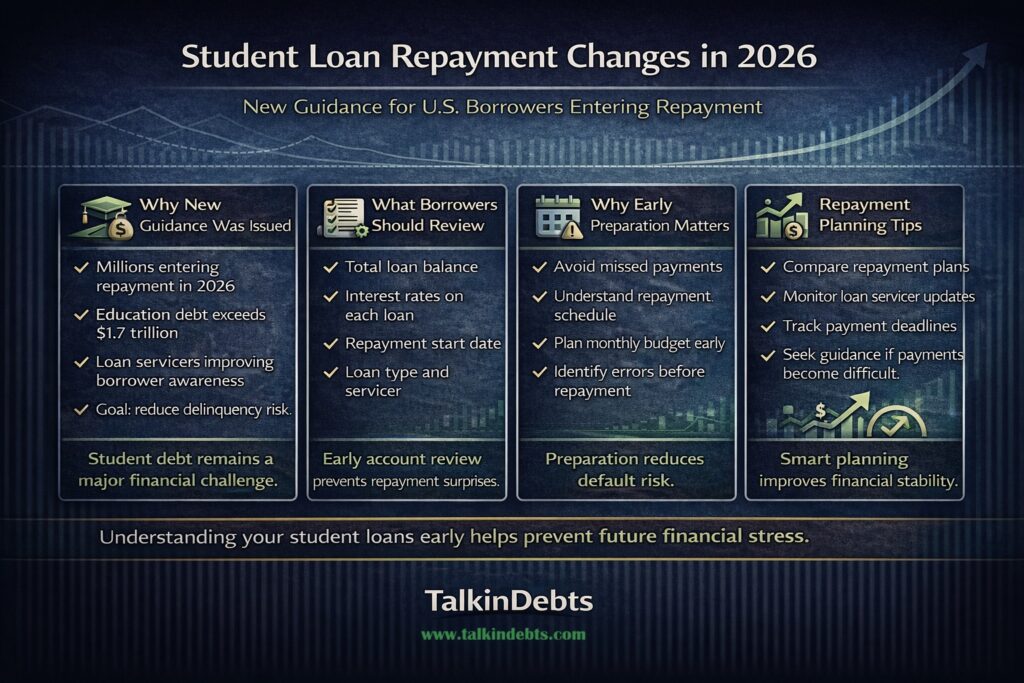
Student loan servicers across the United States have issued updated repayment guidance for borrowers entering repayment in 2026, highlighting key changes in repayment procedures and urging millions of graduates to review their loan accounts before payments begin. The announcement comes as education debt continues to grow and policymakers monitor the financial pressures facing younger households.
According to loan servicing agencies, the new guidance aims to ensure borrowers understand their repayment obligations and available repayment plans as the next cohort of graduates prepares to transition from school into the workforce. Officials say the update reflects efforts to strengthen repayment compliance and reduce the risk of loan delinquency among new borrowers.
The development has drawn attention from financial analysts and consumer groups as student loan debt remains one of the largest categories of household debt in the United States.
Rising Student Loan Debt Adds Pressure on New Borrowers
Student loan balances have expanded steadily over the past decade. Federal data shows that outstanding student loan debt has exceeded $1.7 trillion, affecting more than 43 million borrowers nationwide.
The scale of education debt has become a major economic issue as graduates face rising living costs and uncertain job markets. Housing expenses, inflation, and other financial pressures have increased the challenge of managing repayment obligations for many borrowers.
The latest repayment guidance is intended to help borrowers entering repayment in 2026 navigate these financial realities and avoid repayment disruptions.
Loan servicers say that preparing borrowers earlier in the repayment process may reduce the likelihood of missed payments and loan defaults.
Servicers Emphasize Early Loan Account Review
One of the primary points included in the 2026 repayment guidance is the importance of reviewing loan account information before repayment begins.
Servicers recommend that borrowers confirm key details related to their education loans, including:
- Total outstanding loan balance
- Interest rates associated with each loan
- Scheduled repayment start dates
- Loan types and servicing providers
Many borrowers hold multiple loans across federal and private lending programs. Servicers say reviewing loan accounts early can help borrowers understand their repayment schedules and payment amounts.
The announcement notes that account verification can also help borrowers identify errors or discrepancies before repayment begins.
Income-Driven Repayment Plans Highlighted in Guidance
Loan servicers also highlighted the role of income-driven repayment plans as part of the new guidance for 2026 borrowers.
These repayment programs calculate monthly payments based on borrower income levels and household size, allowing for reduced payments during periods of lower earnings.
Officials say borrowers who qualify for income-driven repayment options must submit updated income documentation in order to maintain eligibility.
Failure to update financial information may result in borrowers being placed in standard repayment plans, which typically carry higher monthly payments.
Income-driven repayment programs have become increasingly important in recent years as student loan balances grow and early-career salaries remain modest in many industries.
Loan Consolidation Options Addressed
The guidance also discusses loan consolidation as a potential option for borrowers managing multiple student loans.
Loan consolidation allows borrowers to combine several federal loans into a single loan with one monthly payment. This process may simplify repayment management and extend repayment timelines.
However, servicers note that consolidation can also change interest calculations and may increase the total amount paid over the life of the loan.
Officials say borrowers considering consolidation should review the terms carefully and evaluate how the process may affect long-term repayment costs.
Economic Conditions Influence Borrower Financial Stability
The timing of the updated repayment guidance coincides with broader economic challenges affecting young professionals. Rising housing costs, inflation, and increasing consumer debt have placed additional pressure on household budgets.
Economic analysts say these factors could influence how easily borrowers manage student loan payments once repayment begins.
Consumer spending trends may also be affected if a growing number of young workers allocate larger portions of their income toward student loan payments.
Some economists have warned that education debt could influence long-term financial decisions, including home purchases, family planning, and retirement savings.
Communication Between Borrowers and Servicers Encouraged
Loan servicers have emphasized the importance of communication between borrowers and servicing providers as repayment begins.
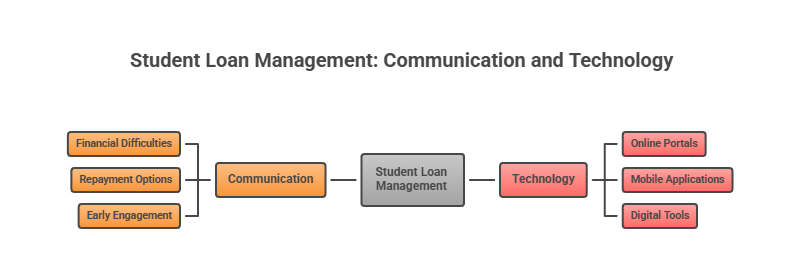
Officials say borrowers experiencing financial difficulties should contact their servicers as early as possible to discuss available options. These may include repayment plan adjustments, temporary payment suspensions, or hardship assistance programs.
Servicers report that many borrowers who fall behind on payments do so after failing to engage with their loan provider.
Early communication, according to servicing agencies, may prevent accounts from entering delinquency or default.
Loan defaults can have significant financial consequences, including damage to credit scores and potential collection activity.
Technology Expanding Access to Loan Management Tools
Another focus of the new guidance is the growing role of digital platforms in student loan management.
Most major student loan servicers now offer online portals and mobile applications that allow borrowers to track loan balances, update repayment plans, and submit documentation electronically.
These platforms are intended to improve transparency and make loan management more accessible for borrowers.
Through digital tools, borrowers can monitor payment histories, enroll in automatic payment systems, and receive notifications regarding repayment deadlines.
Servicers say digital access has become an important component of modern loan servicing operations.
Class of 2026 Faces Transition to Standard Repayment Environment
The graduating class of 2026 is expected to enter repayment during a period of increased attention on student loan policy and borrower protections.
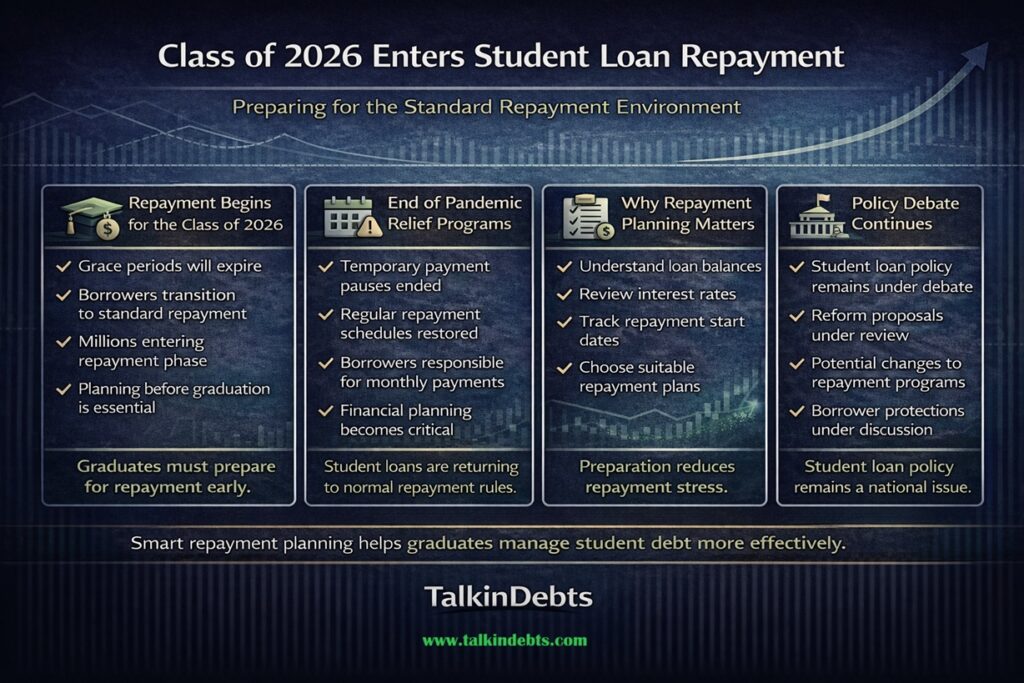
In previous years, temporary relief programs introduced during the pandemic paused repayment obligations for millions of borrowers. Those programs have since ended, returning most borrowers to regular repayment structures.
As a result, new graduates entering repayment must prepare for standard repayment schedules once their grace periods expire.
Education analysts say the transition underscores the importance of repayment planning for students before they graduate.
Student Loan Policy Remains a National Debate
Student loan repayment policy continues to be a central issue in national economic discussions.
Lawmakers and government agencies have debated several potential reforms aimed at addressing rising student loan balances. Proposed policy measures have included expanded loan forgiveness programs, interest rate adjustments, and revised repayment structures.
While some changes have been introduced in recent years, broader reform proposals remain under consideration.
The guidance issued by student loan servicers for 2026 borrowers reflects ongoing efforts to improve borrower awareness while policy discussions continue.
Financial Analysts Monitor Borrower Repayment Trends
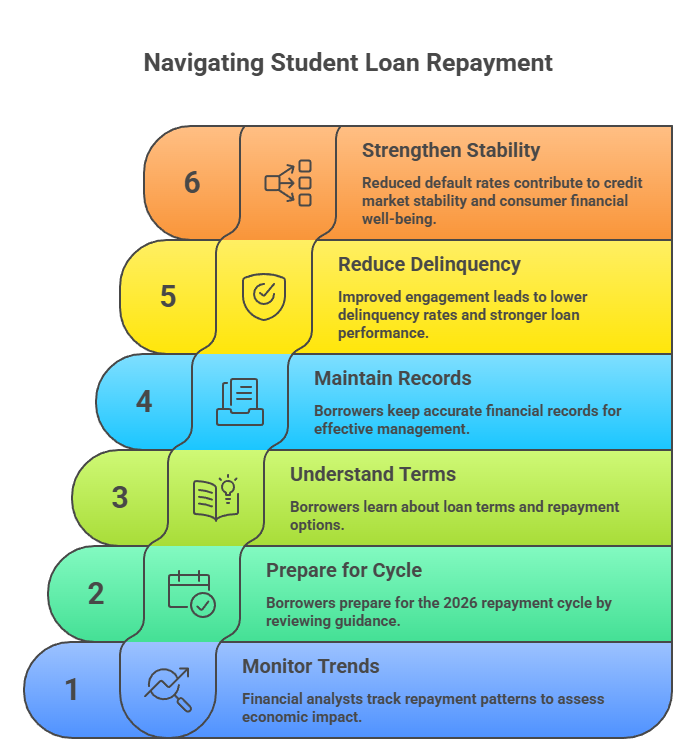
Financial analysts say repayment trends among new borrowers will play an important role in determining the long-term impact of student loan debt on the economy.
If repayment difficulties increase, analysts warn that default rates could rise, potentially affecting credit markets and consumer financial stability.
Conversely, improved borrower engagement and repayment planning could reduce delinquency rates and strengthen loan performance.
Servicers say the latest repayment guidance is intended to support borrowers as they enter the next stage of the student loan lifecycle.
Borrowers Preparing for the 2026 Repayment Cycle
With the repayment cycle for the class of 2026 approaching, loan servicers say borrowers should monitor communications from their loan providers and review repayment information through official servicing portals.
The updated guidance highlights the importance of understanding loan terms, maintaining accurate financial records, and remaining informed about repayment options.
As millions of graduates prepare to enter repayment, student loan management is expected to remain a key financial issue for households, policymakers, and financial institutions in the years ahead.
The announcement from student loan servicers signals a renewed focus on repayment readiness as education debt continues to shape the financial landscape for younger generations.