
UAE Debt Alarm: Expats Struggle as Job Uncertainty Triggers Surge in Personal Loan Defaults
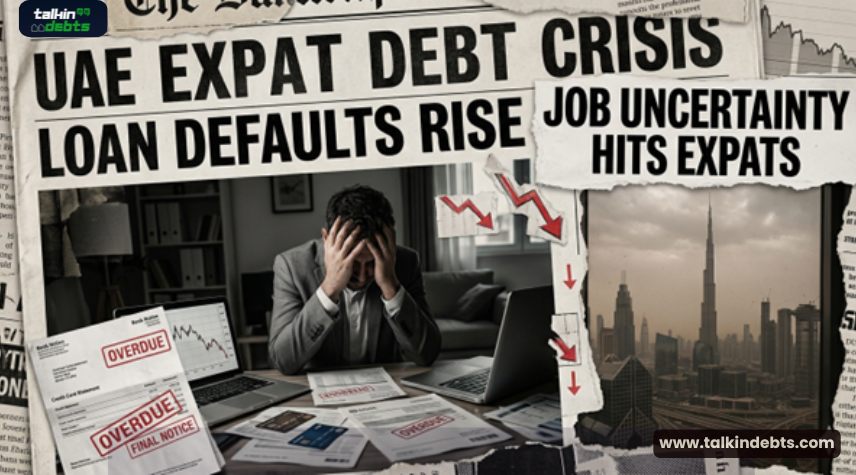
Dubai / Abu Dhabi – April 2026:
A growing financial strain is sweeping across the United Arab Emirates, as thousands of expatriates face mounting debt risks amid rising regional uncertainty, job instability, and salary disruptions. What was once a stable financial environment for foreign workers is now showing cracks, with early indicators pointing toward a potential UAE personal debt crisis centered on the expatriate population.
Banking sources, recruitment firms, and financial advisors are reporting a sharp increase in loan repayment risks in the UAE, particularly among mid-income expats working in construction, retail, logistics, and hospitality sectors. As regional economic pressures intensify, the delicate balance between income and credit that sustained expatriate lifestyles is beginning to falter.
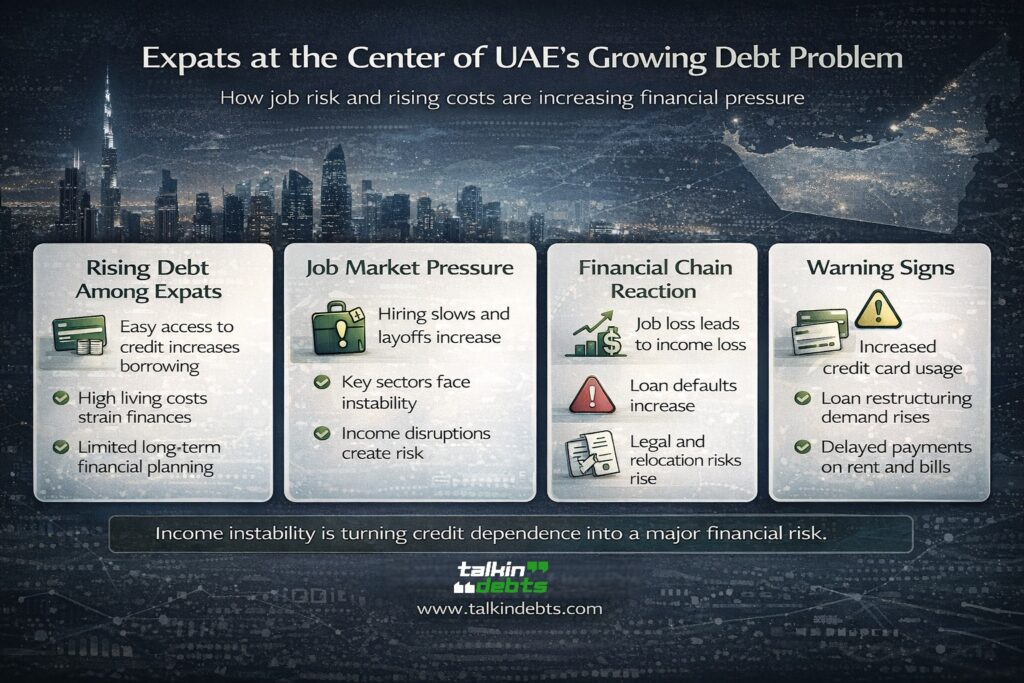
Expats at the Center of UAE’s Growing Debt Problem
The UAE’s economic model relies heavily on expatriate workers, who make up nearly 9 out of 10 residents. For years, easy access to credit fueled consumption, allowing expats to finance cars, homes, education, and lifestyle upgrades.
But that same credit dependency is now turning into a vulnerability.
Financial analysts say that expat debt in the UAE has risen significantly over the past five years, driven by:
- Increased availability of personal loans and credit cards
- Rising cost of living in urban centers
- Social pressure to maintain high living standards
- Limited long-term financial planning among transient workers
“Many expats built their lives assuming income stability,” said a Dubai-based financial consultant. “But today, even a 20–30% salary disruption can push them into a debt spiral.”
Regional Uncertainty Sends Shockwaves Through Job Market
The Middle East’s economic landscape in 2025–2026 has been marked by volatility. Fluctuating oil revenues, geopolitical tensions, and global slowdown fears have forced companies to adopt conservative strategies.
Hiring has slowed. Salary increments have stalled. In some sectors, layoffs have quietly increased.
Industries most affected include:
- Construction and real estate (project delays)
- Retail (declining consumer spending)
- Hospitality and tourism (seasonal fluctuations)
- Logistics and supply chain (global trade disruptions)
For expatriates, job loss is not just a financial setback—it is a life-altering event. Residency visas are tied directly to employment, leaving individuals with limited time to recover before facing relocation pressures.
This creates a dangerous financial chain reaction:
Job loss → Income stop → Loan default → Legal risk
Loan Defaults and Delayed Payments on the Rise
Banking insiders reveal that missed EMIs, credit card rollovers, and restructuring requests have increased notably since late 2025. While official figures remain closely guarded, trends suggest a rising stress level among borrowers.
Common warning signs include:
- Increased minimum payment behavior on credit cards
- Rising demand for loan restructuring
- Growth in short-term borrowing to cover existing debt
- Delays in rent and utility payments
Unlike many Western economies, the UAE maintains a strict stance on debt obligations. Defaulting on loans can trigger:
- Travel restrictions
- Legal action
- Account freezes
- Employment complications
Although recent reforms have introduced more flexible insolvency frameworks, many expatriates remain unaware or hesitant to use them due to fear of reputational or legal consequences.
Cost of Living Surge Tightens Financial Pressure
Adding to the crisis is a sharp rise in living expenses across major emirates.
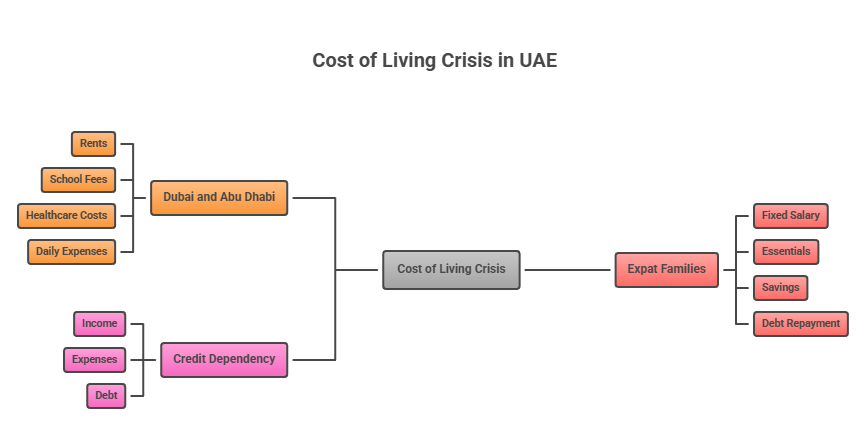
In cities like Dubai and Abu Dhabi:
- Rents have surged significantly due to demand-supply imbalance
- School fees and healthcare costs continue to climb
- Daily expenses—from groceries to transport—are rising steadily
For expat families, the financial equation is becoming increasingly unsustainable.
A mid-level professional earning a fixed salary now finds that a larger portion of income goes toward essentials, leaving little room for savings or debt repayment. This imbalance is pushing more individuals toward credit dependency, further worsening the cycle.
Silent Crisis: Mental and Emotional Toll on Expats
Behind the financial data lies a deeper, often overlooked issue—the psychological burden of debt.
Expats facing financial stress report:
- Anxiety over job security
- Fear of legal consequences
- Pressure to support families back home
- Social isolation due to financial constraints
Unlike citizens, expatriates lack strong institutional safety nets. The absence of unemployment benefits and long-term security amplifies stress levels, turning financial problems into mental health challenges.
Banks Tighten Lending as Risk Perception Grows
Financial institutions in the UAE are also reacting to the shifting landscape.
Banks have started:
- Tightening credit approval criteria
- Increasing scrutiny of borrower profiles
- Reducing exposure to high-risk segments
- Encouraging early restructuring for distressed accounts
While these measures aim to control systemic risk, they also make it harder for already struggling expats to access relief funding, creating a double-edged situation.
Experts Warn of a Gradual Debt Build-Up, Not a Sudden Crash
Unlike global financial crises driven by sudden collapses, the UAE’s current situation is being described as a “slow-burning debt risk.”
“This is not an overnight meltdown,” said a regional economist. “It’s a gradual build-up of financial stress that could peak if job instability continues.”
The concern is not just individual defaults but a broader impact on:
- Consumer spending
- Banking sector stability
- Real estate demand
- Overall economic confidence
What Expats Are Doing to Stay Afloat
In response to growing uncertainty, many expatriates are beginning to adopt more cautious financial behaviors:
- Cutting discretionary spending
- Downsizing housing arrangements
- Taking up secondary income sources
- Accelerating debt repayments where possible
- Exploring financial advisory services
However, experts say these measures may not be enough without broader economic stability and policy support.
Government and Policy Response Under Watch
The UAE government has taken steps in recent years to modernize financial regulations, including:
- Introduction of personal insolvency laws
- Financial literacy initiatives
- Encouragement of responsible lending practices
Yet, the effectiveness of these measures depends on awareness and accessibility, particularly among expatriates who may not fully understand their options.
There is growing discussion about whether additional safeguards—such as structured debt relief programs or employment protection measures—may be required if the situation escalates.
A Turning Point for the UAE’s Expat Economy
The current debt pressures mark a critical moment for the UAE’s expatriate-driven economy. While the country remains one of the most attractive destinations for global talent, the evolving financial risks highlight the need for a shift in how expats approach money, credit, and long-term planning.
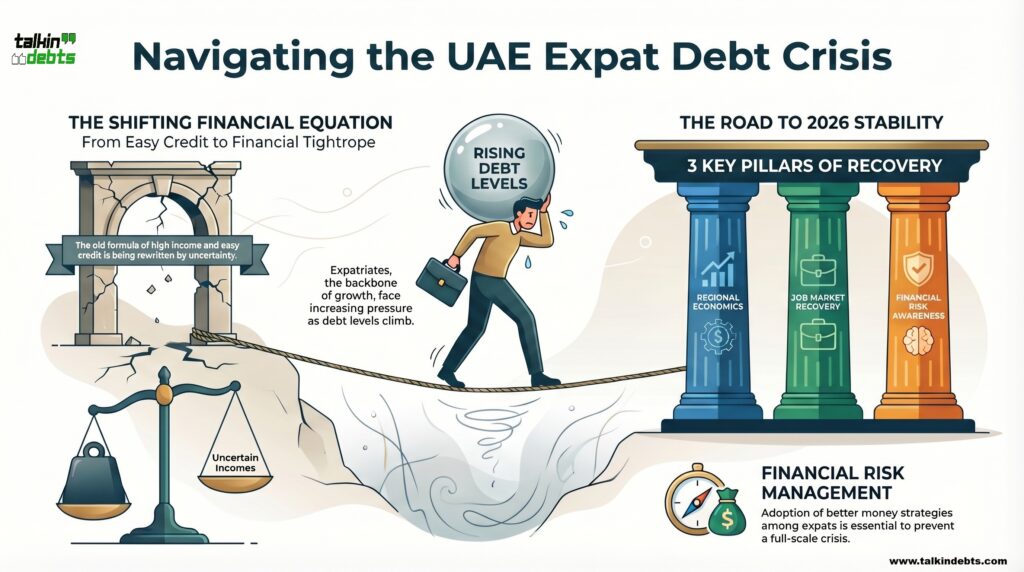
For years, the formula was simple: high income + easy credit = comfortable lifestyle.
Today, that equation is being rewritten.
The Road Ahead
As 2026 unfolds, the trajectory of the UAE’s personal debt situation will largely depend on three key factors:
- Stability in regional economic conditions
- Recovery in job markets and hiring activity
- Awareness and adoption of financial risk management among expats
If these elements align positively, the current stress could stabilize. But if uncertainty persists, the UAE could face a deeper and more widespread expat debt crisis.
For now, the warning signs are clear:
Debt is rising, incomes are uncertain, and expatriates—once the backbone of UAE growth—are increasingly walking a financial tightrope.
The coming months will determine whether this remains a manageable challenge or escalates into a full-scale economic concern.