
Global Markets Reel as Middle East War Intensifies — Fears Grow Over Rising Personal Debt Worldwide
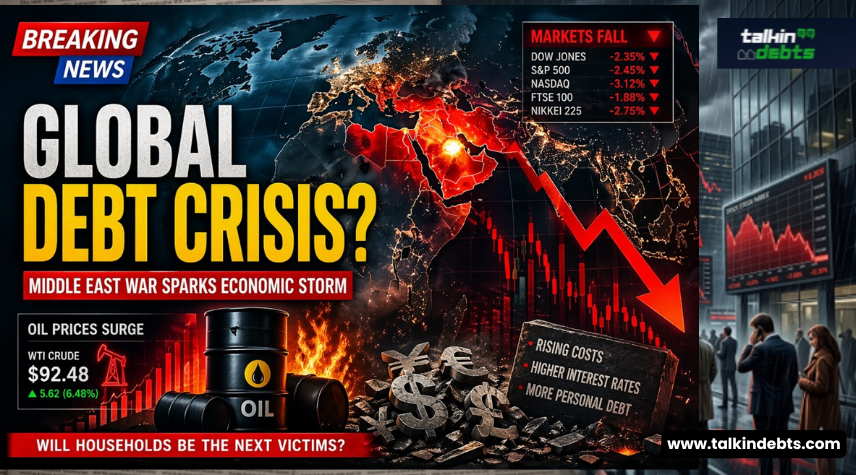
Global financial markets have entered a period of sharp volatility as escalating conflict in the Middle East continues to disrupt investor confidence, energy supply expectations, and economic stability. What began as a geopolitical flashpoint is now rapidly evolving into a broader financial concern, with growing warnings that the crisis could trigger a new wave of personal debt across the world.
Stock markets across major economies have recorded fluctuations, oil prices have surged, and inflation fears have returned to the forefront. The ripple effects are already being felt beyond trading floors, with households facing increasing financial pressure amid rising costs and economic uncertainty.
Global Markets Reel as Middle East War Intensifies and Personal Debt Rises
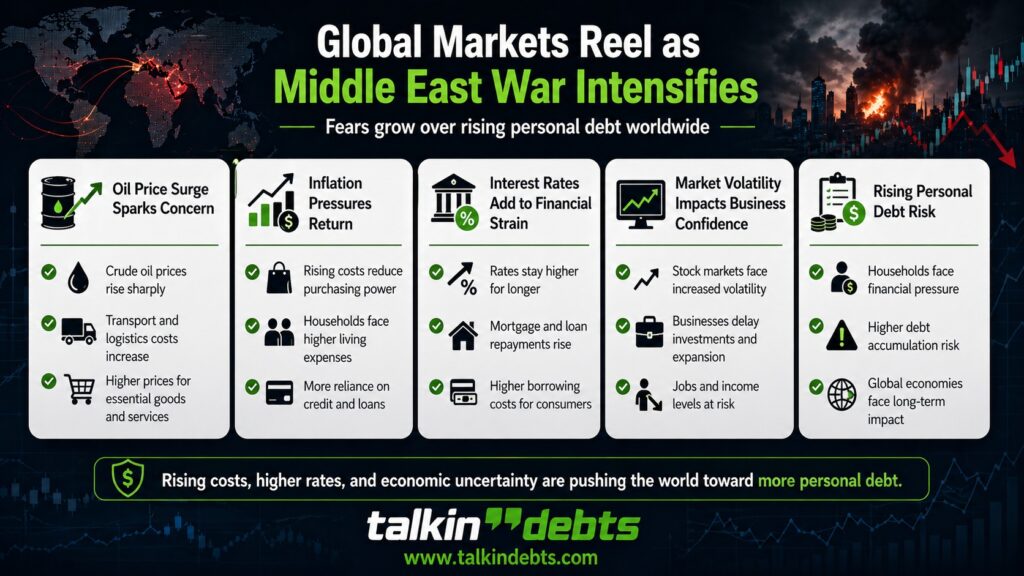
Oil Price Surge Sparks Global Concern
One of the most immediate impacts of the conflict has been a sharp rise in crude oil prices. The Middle East plays a central role in global energy supply, and any disruption in the region raises concerns about shortages.
As oil prices climb, the effects spread quickly across economies. Transportation costs increase, production expenses rise, and supply chains become more expensive to maintain. This leads to higher prices for essential goods and services, directly affecting consumers.
Fuel prices in several regions have already started to rise, with early signs of increased costs in logistics, food distribution, and manufacturing sectors.
Inflation Pressures Return
The surge in energy costs is expected to push inflation higher, reversing progress made by several economies in stabilizing prices. Inflation had already been a major concern in recent years, and the current crisis is adding fresh pressure.
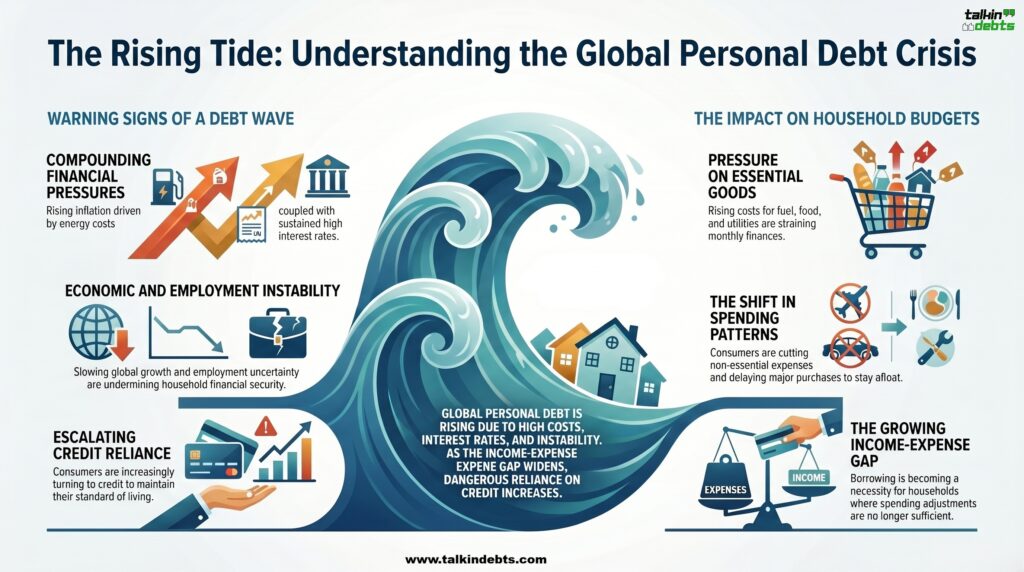
Higher inflation reduces purchasing power, making it more difficult for households to manage everyday expenses. When wages do not increase at the same pace as costs, consumers often rely on borrowing to maintain their standard of living.
This growing dependence on credit is a key factor behind concerns of rising personal debt.
Interest Rates Add to Financial Strain
The conflict has complicated the outlook for interest rates globally. Central banks, which had been navigating inflation control measures, may now be forced to maintain higher interest rates for longer periods.
Elevated interest rates increase the cost of borrowing across all forms of credit. Mortgage repayments become more expensive, credit card interest rises, and personal loans carry higher repayment burdens.
For households already managing financial commitments, this creates added strain. The combination of rising living costs and higher borrowing costs significantly increases the risk of debt accumulation.
Market Volatility Impacts Business Confidence
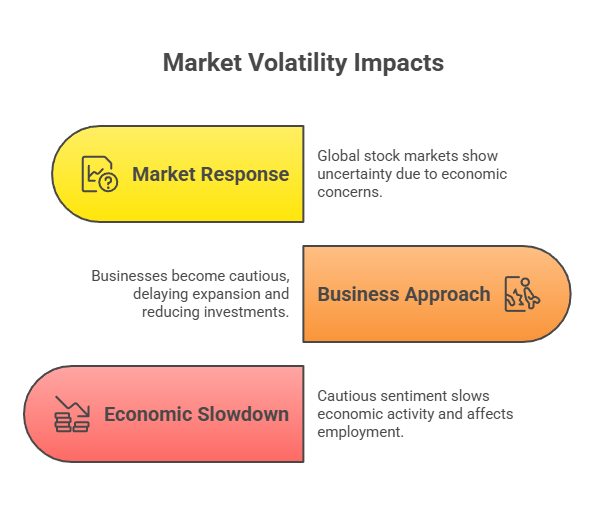
Global stock markets have responded with uncertainty, reflecting concerns about economic growth and corporate profitability. Sectors dependent on stable energy prices and global supply chains have shown signs of stress.
As market volatility increases, businesses often adopt a cautious approach. Expansion plans may be delayed, investments reduced, and hiring decisions reconsidered.
This cautious sentiment can slow economic activity and create a chain reaction that ultimately affects employment and income levels.
Employment Risks Begin to Surface
Economic uncertainty often leads to shifts in the labor market. Companies facing higher operating costs and unpredictable demand may introduce hiring freezes or reduce workforce expansion.
Industries heavily dependent on fuel and logistics are particularly vulnerable. Any prolonged disruption could lead to reduced working hours, delayed wage growth, or job losses.
For households, income instability is one of the strongest drivers of debt. When earnings are uncertain, individuals often turn to credit to cover essential expenses such as housing, food, and healthcare.
Household Borrowing Trends on the Rise
Global household debt levels were already increasing before the current crisis. Low interest rates in previous years encouraged borrowing, while uneven economic recovery left many households financially stretched.
Recent trends indicate a steady rise in credit card usage, personal loans, and alternative financing options such as buy-now-pay-later services.
The current market instability is expected to accelerate these trends. As living costs rise and income pressures grow, more households may rely on credit as a short-term solution, increasing long-term financial risk.
Emerging Economies Face Greater Challenges
The impact of the crisis is expected to be more severe in emerging markets. Many of these economies rely heavily on imported energy, making them more sensitive to rising oil prices.
Currency fluctuations are adding to the pressure. As investors shift funds toward safer assets, some currencies have weakened, increasing the cost of imports and driving inflation higher.
For households in these regions, the combination of rising prices, limited income growth, and restricted access to affordable credit creates a heightened risk of debt accumulation.
Lending Conditions Tighten
Financial institutions are responding to the uncertainty by becoming more cautious in their lending practices. Stricter approval processes and higher risk assessments are being observed in several markets.
This shift limits access to affordable credit for many consumers. At the same time, those who are approved for loans may face higher interest rates.
As a result, individuals with urgent financial needs may turn to high-cost borrowing options, further increasing their vulnerability to debt.
Governments Monitor and Respond
Governments worldwide are closely tracking the economic impact of the conflict. Measures such as fuel subsidies, targeted financial assistance, and sector-specific support are being considered in some regions.
However, policy responses are constrained by existing fiscal pressures. High public debt levels in many countries limit the ability to introduce large-scale financial relief.
The effectiveness of these measures will depend on the duration of the conflict and the resilience of each economy.
Warning Signs of a Broader Debt Wave
Several indicators suggest that the risk of a global increase in personal debt is growing:
- Rising inflation driven by energy costs
- Sustained high interest rates
- Increased reliance on consumer credit
- Slowing economic growth
- Employment uncertainty
If these factors persist, the possibility of a broader debt wave becomes more likely, with potential long-term consequences for financial stability.
Consumers Begin to Feel the Impact
The effects of the crisis are already visible in household budgets. Increased expenses for fuel, food, and utilities are putting pressure on monthly finances.
In response, many consumers are adjusting their spending patterns, cutting non-essential expenses, and delaying major purchases. However, for some households, these adjustments are not enough, leading to increased reliance on borrowing.
This shift highlights the growing gap between income and expenses in an uncertain economic environment.
Outlook Remains Uncertain
The future trajectory of global markets and personal debt levels will largely depend on how the situation in the Middle East develops. Continued escalation could deepen economic disruptions, while stabilization may help restore market confidence.
For now, uncertainty remains the defining factor.
The current crisis underscores how quickly geopolitical events can influence global financial systems and everyday life. As markets continue to react and economies adjust, the risk of rising personal debt is becoming a central concern.
What is unfolding is not just a market reaction, but a broader economic shift—one that could shape household financial stability across the world in the months ahead.