
Oil and Gas Price Surge from Middle East Crisis Pushes Household Debt Higher
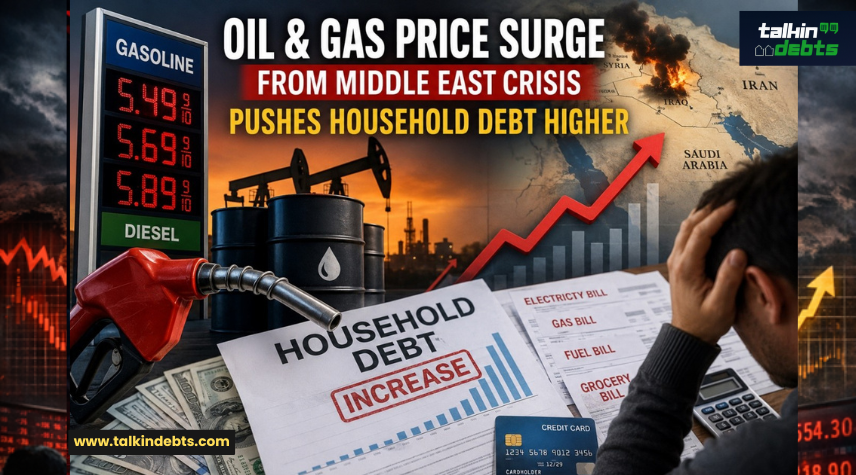
The global economy is once again under pressure as rising tensions in the Middle East trigger a sharp increase in oil and gas prices. From fuel stations to grocery stores, consumers across the world are feeling the effects of the latest energy shock. Economists warn that the growing energy crisis could become one of the biggest drivers of household debt increase in 2026, as families struggle to manage higher living costs while wages remain stagnant.
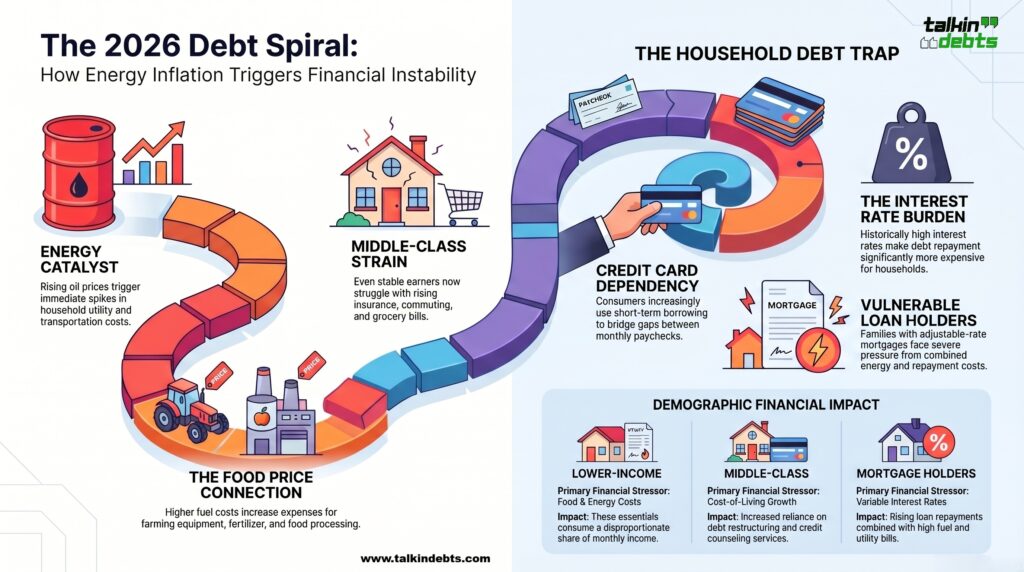
The oil price impact on debt is becoming increasingly visible. Households already dealing with inflation, expensive housing, and high interest rates are now forced to spend more on transportation, electricity, heating, and essential goods. As daily expenses rise, many consumers are turning to credit cards, personal loans, and buy-now-pay-later services just to maintain their normal lifestyles.
Financial experts say the current situation is creating a dangerous cycle where the cost-of-living crisis 2026 is directly fueling long-term debt problems for millions of people worldwide.
Middle East Crisis Sends Oil Prices Soaring
Global crude oil prices surged dramatically after renewed geopolitical instability disrupted supply routes and raised fears of reduced oil exports from the Middle East. Brent crude crossed major resistance levels during recent trading sessions, while natural gas markets also experienced significant volatility.
Energy analysts believe the uncertainty surrounding global supply chains is likely to continue pushing prices upward over the coming months. Countries heavily dependent on imported fuel are expected to face the greatest economic pressure, especially developing economies where transportation and energy costs already consume a large portion of household income.
The rising cost of crude oil affects far more than gasoline prices. Modern economies rely on petroleum products for transportation, manufacturing, agriculture, shipping, and electricity generation. As energy prices rise, businesses pass additional costs to consumers, increasing the prices of food, consumer goods, airline tickets, logistics services, and household essentials.
This chain reaction is now intensifying the global cost-of-living crisis of 2026.
Fuel Prices Begin Hitting Everyday Consumers
Consumers are already noticing the impact at fuel stations. Petrol and diesel prices have climbed steadily in many countries, increasing commuting costs for workers and raising operational expenses for businesses.
For families that rely on personal vehicles for work, school, and daily travel, the additional monthly fuel expense can be substantial. Delivery drivers, ride-share workers, and transport operators are particularly vulnerable because fuel is directly tied to their income.
Public transportation systems are also under pressure. In many regions, transportation authorities are considering fare hikes to offset higher fuel costs. This means even households without private vehicles are indirectly paying more due to the oil and gas price surge.
Experts say transportation inflation often spreads rapidly into other sectors because nearly every product depends on logistics and delivery networks.
Household Energy Bills Climb Rapidly
Electricity and heating costs are becoming another major concern. Countries that depend heavily on imported gas are experiencing rapid increases in utility bills, especially as energy companies adjust rates to match higher wholesale costs.
For low-income and middle-income households, rising energy bills are becoming difficult to manage. Many families are cutting discretionary spending just to pay for electricity, cooking gas, and heating.
In colder regions, the pressure is even more severe. Analysts fear some households may be forced to choose between paying utility bills and covering other essential expenses such as groceries, rent, healthcare, or loan repayments.
This financial strain is contributing directly to higher consumer borrowing levels.
Oil Price Impact on Debt Becomes More Visible
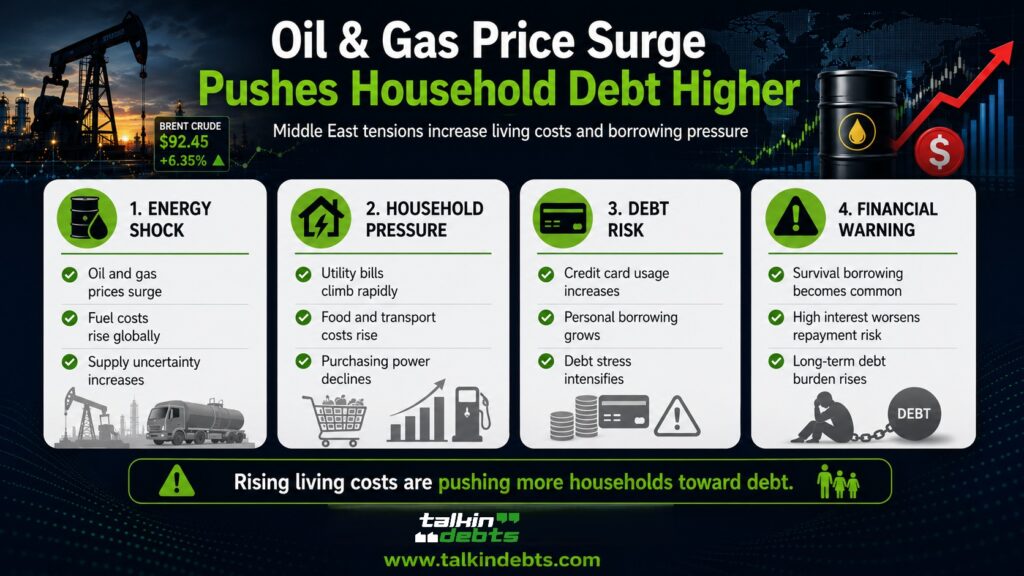
Banks and financial institutions are reporting increased use of credit products as households attempt to cope with rising costs. Credit card balances are climbing in multiple countries, while delinquency risks are beginning to rise among financially stressed borrowers.
The oil price impact on debt is particularly strong among households already carrying existing financial obligations such as mortgages, car loans, student debt, or medical debt. Higher fuel and energy costs reduce disposable income, leaving consumers with fewer resources to repay existing loans.
Financial advisers warn that many households are entering a “survival borrowing” phase where debt is no longer used for large purchases but instead for basic living expenses.
This trend is especially concerning because borrowing for necessities often leads to long-term financial instability. Once consumers begin relying on revolving credit for food, transportation, and utilities, debt can grow rapidly due to high interest rates.
Credit Card Debt Surges During Cost-of-Living Crisis 2026
The cost-of-living crisis 2026 is accelerating credit card usage globally. Consumers facing inflation in fuel, groceries, and utilities are increasingly using short-term borrowing to bridge gaps between paychecks.
Several financial analysts predict that household debt increase figures could reach record highs if oil prices remain elevated throughout the year. Credit card debt is considered particularly risky because interest rates remain historically high in many economies fighting inflation.
For financially vulnerable households, even small increases in fuel prices can trigger broader financial problems. A higher transportation bill may reduce the ability to pay rent on time, cover medical costs, or repay existing loans.
Experts say many consumers underestimate how quickly debt accumulates during inflationary periods. A temporary reliance on credit can eventually become a long-term repayment burden.
Food Prices Rise Alongside Energy Costs
The oil and gas price surge is also driving up food prices. Agriculture depends heavily on fuel for farming equipment, transportation, fertilizer production, and food processing.
As energy costs rise, food producers and retailers pass those expenses to consumers. Grocery prices are already increasing in many markets, placing additional strain on household budgets.
Lower-income households are expected to be hit hardest because food and energy already account for a large share of their monthly spending. Economists warn that prolonged inflation in these categories could significantly deepen financial inequality.
Many families are now reducing non-essential purchases, postponing travel plans, and cutting entertainment expenses to manage rising living costs. However, for households already operating on tight budgets, spending cuts alone may not be enough.
Rising Interest Rates Make Debt More Dangerous
The situation becomes even more difficult because interest rates remain elevated in many countries. Central banks have kept rates high to combat inflation, making borrowing more expensive for consumers.
As a result, households using credit cards or variable-rate loans face growing repayment pressure. Higher interest costs mean consumers pay more over time, even if their borrowing levels remain unchanged.
Mortgage holders with adjustable-rate loans are particularly vulnerable. Rising energy and transportation expenses, combined with higher monthly loan repayments, create a severe financial burden for many families.
Economists warn that if oil prices continue climbing, central banks may delay rate cuts, prolonging financial stress across global markets.
Middle-Class Families Feel the Pressure
While lower-income households are most vulnerable, middle-class families are also increasingly affected by the household debt increase trend.
Many middle-income earners who previously maintained stable budgets are now struggling with rising insurance costs, higher commuting expenses, expensive groceries, and growing utility bills.
Financial counselors report an increase in households seeking debt restructuring advice, payment extensions, and credit counseling services.
Some families are delaying major life decisions such as home purchases, education investments, or retirement savings due to economic uncertainty.
Experts say the psychological impact of financial stress should not be underestimated. Constant pressure from rising bills and growing debt can affect mental health, workplace productivity, and family relationships.
Small Businesses Also Under Financial Stress
The oil and gas crisis is not only affecting households. Small businesses are also facing rising operational costs linked to transportation, manufacturing, and energy usage.
Many business owners are passing costs to consumers through price increases, while others are reducing staff, cutting services, or delaying expansion plans.
In sectors such as logistics, delivery, construction, and manufacturing, fuel costs represent a major operational expense. Sustained oil price increases could lead to slower economic growth and reduced employment opportunities.
This creates an additional risk for households because weaker job markets often result in reduced income stability and greater dependence on debt.
Governments Face Growing Pressure
Governments worldwide are under increasing pressure to protect consumers from rising energy costs. Some countries are considering fuel subsidies, tax reductions, or energy assistance programs to ease the burden on households.
However, many governments are already dealing with budget deficits and high public debt levels, limiting their ability to provide large-scale financial relief.
Economic experts warn that prolonged energy inflation could trigger broader economic instability if policymakers fail to balance inflation control with consumer protection.
The situation has renewed debate about energy security, alternative energy investments, and the need to reduce dependence on volatile global oil markets.
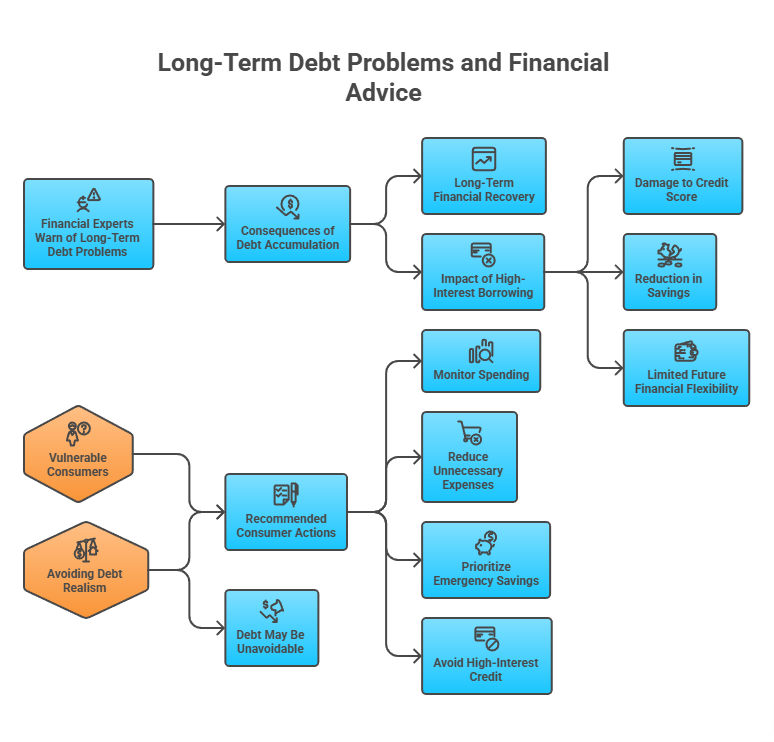
Financial Experts Warn of Long-Term Debt Problems
Debt specialists believe the current crisis could have lasting financial consequences even if oil prices eventually stabilize.
Households accumulating debt during inflationary periods often require years to recover financially. High-interest borrowing can damage credit scores, reduce savings, and limit future financial flexibility.
Younger consumers are considered especially vulnerable because many already face high housing costs, student loans, and limited wage growth.
Financial advisers recommend that consumers closely monitor spending, reduce unnecessary expenses, prioritize emergency savings, and avoid relying excessively on high-interest credit products.
However, experts acknowledge that for many families facing rising living costs, avoiding debt entirely may no longer be realistic.
Global Economic Uncertainty Continues
The oil and gas price surge linked to the Middle East crisis has become one of the defining economic challenges of 2026. Rising fuel prices, expensive utilities, food inflation, and high borrowing costs are combining to create severe financial pressure for households around the world.
The growing oil price impact on debt is reshaping consumer behavior as families increasingly rely on credit to survive rising expenses. At the same time, the cost-of-living crisis of 2026 continues to erode purchasing power and financial stability.
Economists warn that unless energy markets stabilize and inflation eases, household debt increase trends may continue accelerating throughout the year. For millions of consumers, the combination of expensive energy and growing debt is becoming an increasingly dangerous financial reality.