
Middle East Crisis Keeps Oil Prices Elevated as Higher Fuel Costs Push Household Debt Higher
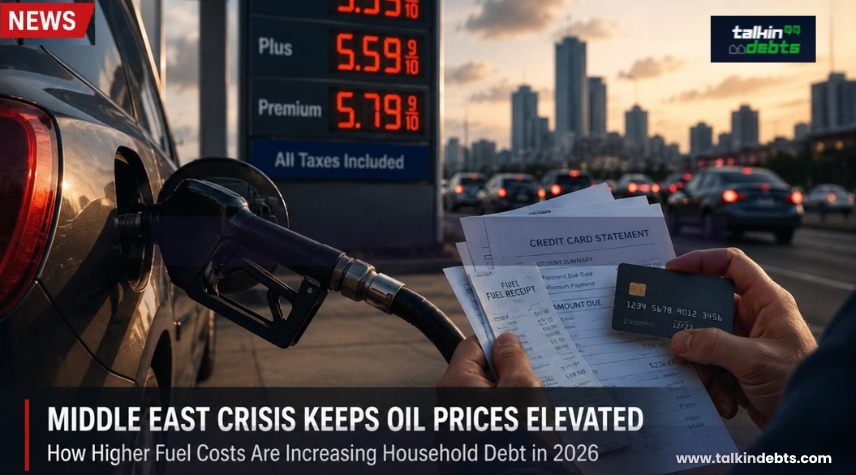
June, 2026 — Ongoing geopolitical tensions in the Middle East continue to keep global oil markets under pressure, with elevated crude prices fueling inflation and adding fresh financial strain to households worldwide. As uncertainty over regional stability persists, higher energy costs are flowing through the global economy, raising transportation expenses, increasing the price of everyday goods, and contributing to a growing reliance on consumer credit.
Energy analysts say oil markets have remained highly sensitive to developments across the region, where several major oil-producing nations and key shipping routes play a crucial role in global energy supplies. Although large-scale supply disruptions have largely been avoided, the continued uncertainty has kept crude prices elevated, preventing fuel prices from easing significantly during the first half of 2026.
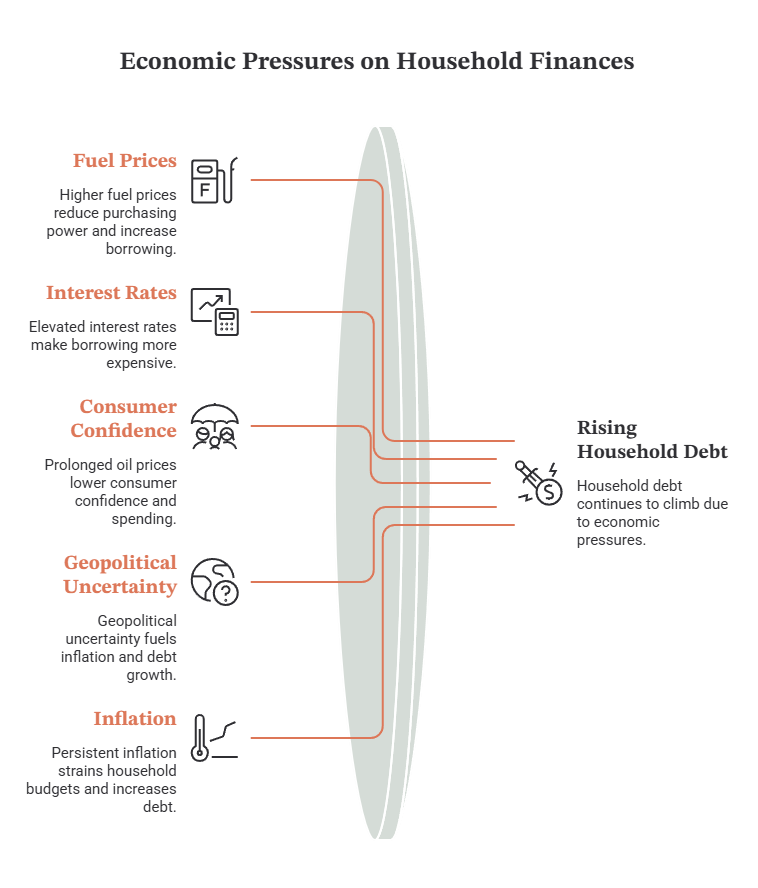
The sustained increase in fuel costs is becoming one of the biggest contributors to the cost-of-living crisis 2026, with households facing higher expenses across multiple categories. Economists warn that the combination of persistent inflation and elevated borrowing costs is forcing more families to depend on credit cards and personal loans simply to manage everyday expenses.
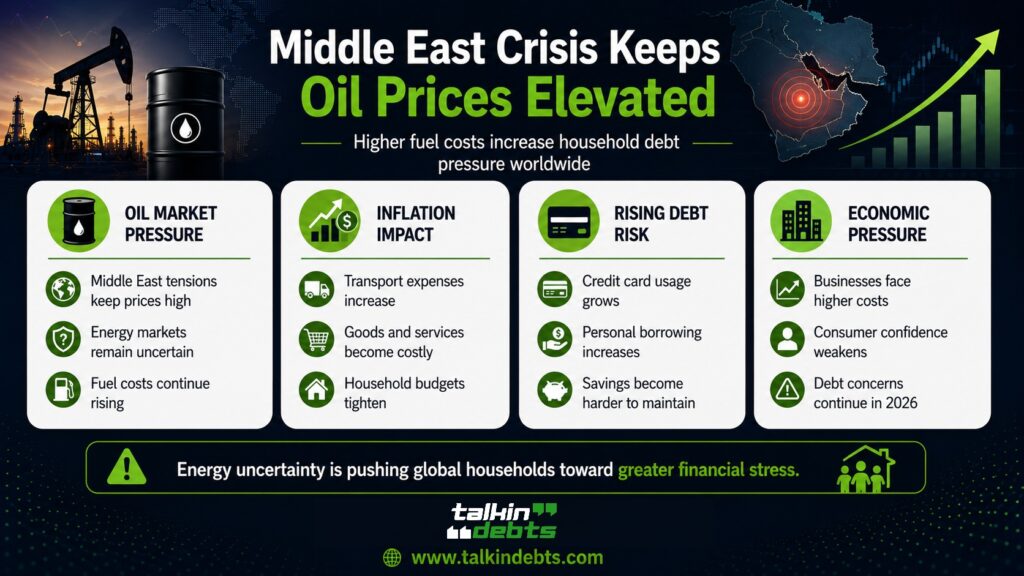
Middle East Tensions Keep Oil Markets on Edge
Global commodity markets have closely monitored developments in the Middle East throughout the year, with investors reacting quickly to any indication that energy supplies could face disruption. The region remains one of the world’s most important sources of crude oil, making geopolitical uncertainty a significant driver of market sentiment.
Rather than responding only to physical supply shortages, traders are increasingly pricing in geopolitical risk. This uncertainty has created an additional premium in oil markets, keeping benchmark crude prices above levels many economists expected earlier this year.
Higher crude prices are being reflected almost immediately at fuel stations, where motorists continue paying more for petrol and diesel. Businesses that depend heavily on transportation are also experiencing rising operating costs, prompting many to increase prices for goods and services.
Market analysts believe energy prices are likely to remain volatile until there is greater clarity surrounding regional stability. Even temporary periods of uncertainty can trigger significant price swings, affecting businesses, investors, and consumers alike.
Higher Fuel Costs Feed Inflation Pressures
The impact of elevated oil prices extends well beyond transportation. Fuel is a critical component of global supply chains, influencing the cost of manufacturing, shipping, agriculture, aviation, and retail distribution.
As logistics companies pay more for diesel and freight, those higher costs gradually move through the economy. Food distributors, retailers, manufacturers, and online businesses often pass a portion of these additional expenses to consumers, contributing to broader inflation.
The result is that households are paying more not only at fuel stations but also in supermarkets, restaurants, utility bills, delivery services, and other essential spending categories.
Economists note that energy inflation has historically been one of the fastest ways for higher commodity prices to affect consumer spending because fuel influences nearly every stage of production and distribution.
While several central banks have made progress in slowing overall inflation, elevated energy costs remain a significant obstacle to returning consumer prices to more stable levels.
Households Turn to Credit as Living Costs Rise
The connection between oil prices and household debt has become increasingly evident as rising living costs continue to reduce disposable income.
Financial institutions have reported growing use of revolving credit as consumers attempt to manage higher monthly expenses. Credit cards are increasingly being used for essential purchases, including groceries, fuel, utility payments, and healthcare costs, rather than discretionary spending.
At the same time, lenders have seen stronger demand for personal loans as borrowers seek additional financial flexibility. Some consumers are consolidating existing debt, while others are borrowing simply to maintain household cash flow as inflation continues to pressure family budgets.
Financial experts caution that while borrowing can provide temporary relief, prolonged dependence on credit may become difficult to sustain if fuel prices remain elevated and interest rates stay relatively high.
Lower-income households remain particularly vulnerable, as a larger share of their income is already allocated to essential expenses. Even modest increases in transportation or food costs can significantly affect monthly budgets, leaving little room for savings or unexpected financial emergencies.
Businesses Face Rising Operating Costs
Businesses are also feeling the effects of elevated oil prices as transportation, logistics, and production expenses continue to increase.
Freight companies, delivery operators, airlines, manufacturers, and retailers all rely heavily on fuel, making higher energy costs difficult to absorb over extended periods. Many companies have already adjusted pricing strategies to offset increasing operating expenses, contributing to broader inflation throughout the economy.
Small businesses, which often operate with narrower profit margins, face particular challenges. Many are balancing higher supplier costs against weakening consumer spending, making pricing decisions increasingly difficult.
Industry observers say prolonged fuel inflation may also slow business investment, delay expansion plans, and reduce hiring activity if operating costs continue rising during the second half of the year.
Economists Warn Household Debt Could Continue Climbing
Economic researchers believe the relationship between rising fuel prices and household borrowing will remain a major financial concern throughout the remainder of 2026.
Higher living costs are reducing consumers’ purchasing power at a time when borrowing has become more expensive due to elevated interest rates. Without meaningful declines in fuel prices or stronger wage growth, many households may continue relying on credit to meet everyday expenses.
Analysts also note that prolonged periods of elevated oil prices tend to affect consumer confidence, as families become more cautious about discretionary spending while prioritizing housing, food, transportation, and utility bills.
Some economists believe household debt levels could continue increasing if geopolitical uncertainty remains unresolved and inflation persists across essential sectors of the economy.
Markets Watch for Signs of Relief
Investors will continue monitoring developments in the Middle East for indications that regional tensions may ease in the coming months. Any improvement in geopolitical stability could reduce pressure on global oil markets and help moderate fuel prices.
Conversely, renewed disruptions affecting production or shipping routes could extend the period of elevated energy costs, increasing inflationary pressure on households and businesses alike.
For policymakers, the challenge remains balancing inflation control with economic growth. Central banks continue monitoring energy-driven inflation, while governments assess measures aimed at reducing the burden of higher living costs on consumers.
For households, however, the immediate reality is clear. Rising fuel prices are no longer confined to the energy sector—they are influencing grocery bills, transportation expenses, utility costs, and monthly budgets. As the cost of living crisis 2026 continues, the link between oil prices and household debt is becoming increasingly difficult to ignore, with many families turning to credit simply to keep pace with the rising cost of everyday life.