
Federal Reserve Holds Rates Steady — What It Means for Your Credit Card and Loan Payments
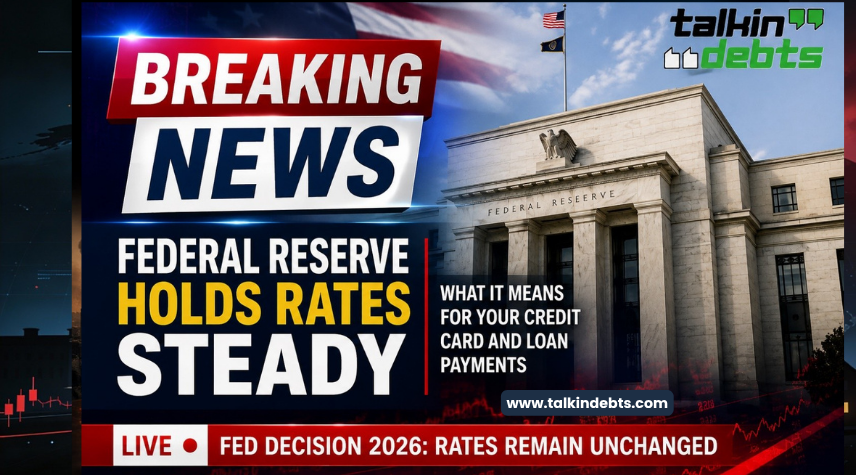
— The U.S. Federal Reserve has decided to leave interest rates unchanged, extending its wait-and-see approach as policymakers continue to evaluate inflation, economic growth, and labor market conditions. The decision, widely anticipated by financial markets, means borrowing costs for consumers are likely to remain elevated, affecting everything from credit card balances to personal loans and auto financing.
Federal Reserve holds rates steady
The Federal Open Market Committee (FOMC), the Fed’s policy-making body, voted to maintain its benchmark federal funds rate, signaling that officials are not yet ready to begin a significant easing cycle despite ongoing expectations from some investors that rate cuts could occur later in the year.
The move comes as inflation has moderated from its recent highs but remains a key concern for policymakers seeking to ensure price pressures continue moving toward the central bank’s long-term target. At the same time, economic growth has remained resilient, and the labor market has continued to show strength, giving the Fed additional room to keep rates at current levels.
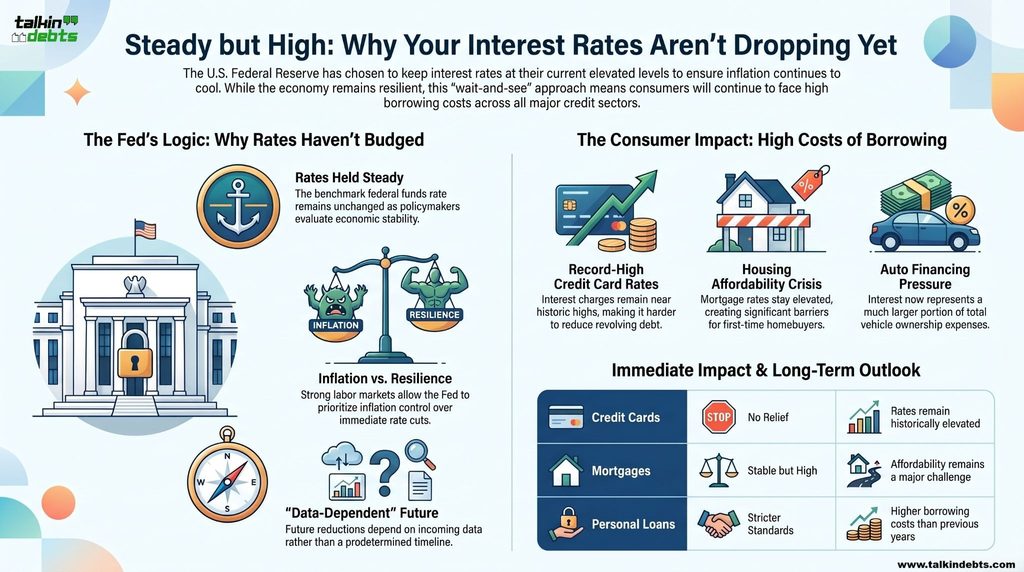
While the decision does not directly change the rates consumers pay on loans or credit cards overnight, it reinforces the higher-rate environment that has characterized the U.S. economy over the past several years.
Consumers Continue to Face High Borrowing Costs
For millions of Americans carrying revolving credit card debt, the Fed’s decision means little immediate relief from high interest charges.
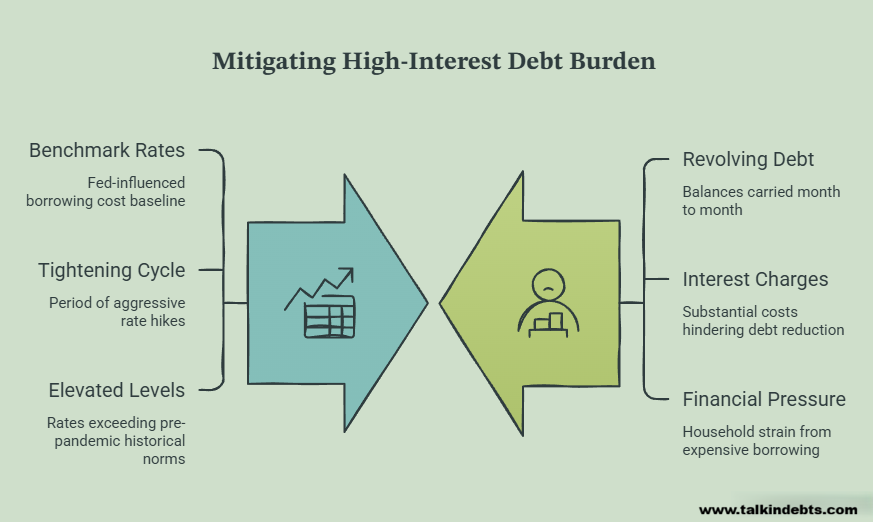
Credit card rates are heavily influenced by benchmark interest rates and have risen significantly during the Fed’s tightening cycle. Although rates are no longer increasing as rapidly as they did during previous rate hikes, they remain near historically elevated levels.
Financial analysts note that consumers carrying balances from month to month will continue paying substantial interest costs, making it more difficult to reduce outstanding debt.
“Consumers who are relying heavily on credit cards are still facing a challenging environment,” said one market analyst following the Fed announcement. “Even without additional rate increases, borrowing remains expensive compared with pre-pandemic levels.”
According to industry data, average credit card interest rates remain well above levels seen before the Federal Reserve began raising rates to combat inflation. As a result, households with significant revolving debt continue to feel pressure from monthly interest charges.
Impact on Personal Loans and Debt Consolidation
The Fed’s decision also has implications for consumers considering personal loans or debt consolidation products.
Many borrowers use personal loans to combine multiple high-interest debts into a single monthly payment. However, lenders continue pricing these loans based on the broader interest-rate environment.
As long as benchmark rates remain elevated, consumers seeking new financing may encounter higher borrowing costs than they would have several years ago.
Financial institutions have also maintained stricter lending standards in some segments, reflecting ongoing economic uncertainty and concerns about consumer credit performance.
Industry observers say borrowers should carefully compare loan offers and review total repayment costs before committing to new debt obligations.
Mortgage Market Watches Fed Signals Closely
Although mortgage rates are not directly tied to the federal funds rate, the housing market closely monitors Federal Reserve decisions because they influence investor expectations and broader financial conditions.
Mortgage rates have remained substantially higher than the record lows experienced during the pandemic period, creating affordability challenges for many prospective homebuyers.
Housing analysts say the Fed’s decision to hold rates steady may help stabilize mortgage markets, but significant declines in home financing costs are unlikely unless broader economic conditions support future monetary easing.
Existing homeowners with fixed-rate mortgages will not see any immediate changes to their monthly payments. However, borrowers with adjustable-rate mortgages could continue facing elevated financing costs depending on the terms of their loans.
Real estate professionals have noted that higher borrowing costs continue to weigh on housing affordability, particularly for first-time buyers entering the market.
Auto Financing Remains Expensive
The automotive sector is another area where consumers are feeling the effects of higher interest rates.
Vehicle buyers financing new or used cars have experienced rising monthly payments as loan rates increased alongside broader market interest rates.
While the Fed’s latest decision does not introduce additional upward pressure, it also means significant relief is unlikely in the near term.
Industry data shows that financing costs now represent a larger portion of total vehicle ownership expenses than they did several years ago. Consumers with lower credit scores are often facing the highest borrowing costs, making affordability an ongoing concern across the auto market.
Markets Look for Clues on Future Rate Cuts
Investors and economists are now focused on what the Fed’s decision may indicate about the future path of monetary policy.
Market participants have spent much of the year debating when the central bank could begin reducing rates. However, Federal Reserve officials have repeatedly emphasized that future decisions will depend on incoming economic data rather than predetermined timelines.
Inflation remains the most closely watched indicator. Although price growth has slowed considerably from its peak, policymakers continue seeking evidence that inflation is moving sustainably toward target levels.
Employment figures, consumer spending trends, wage growth, and overall economic performance will also play important roles in determining future policy decisions.
Financial markets often react strongly to any changes in Federal Reserve guidance, with stocks, bonds, and lending markets adjusting expectations based on policymakers’ comments about future economic conditions.
Economic Outlook Remains Uncertain
The Fed’s latest decision reflects the complex economic landscape facing policymakers.
On one hand, inflation has shown signs of improvement compared with the rapid price increases seen in recent years. On the other hand, officials remain cautious about declaring victory too early and risking a resurgence in inflationary pressures.
Economic growth has remained stronger than many analysts expected, while unemployment has stayed relatively low by historical standards. These factors have reduced pressure on the Fed to quickly lower rates.
At the same time, higher borrowing costs continue affecting consumers, businesses, and industries that rely heavily on financing.
Economists remain divided on how quickly rates could move lower in the future. Some expect gradual reductions if inflation continues easing, while others believe policymakers may keep rates elevated longer to ensure price stability.
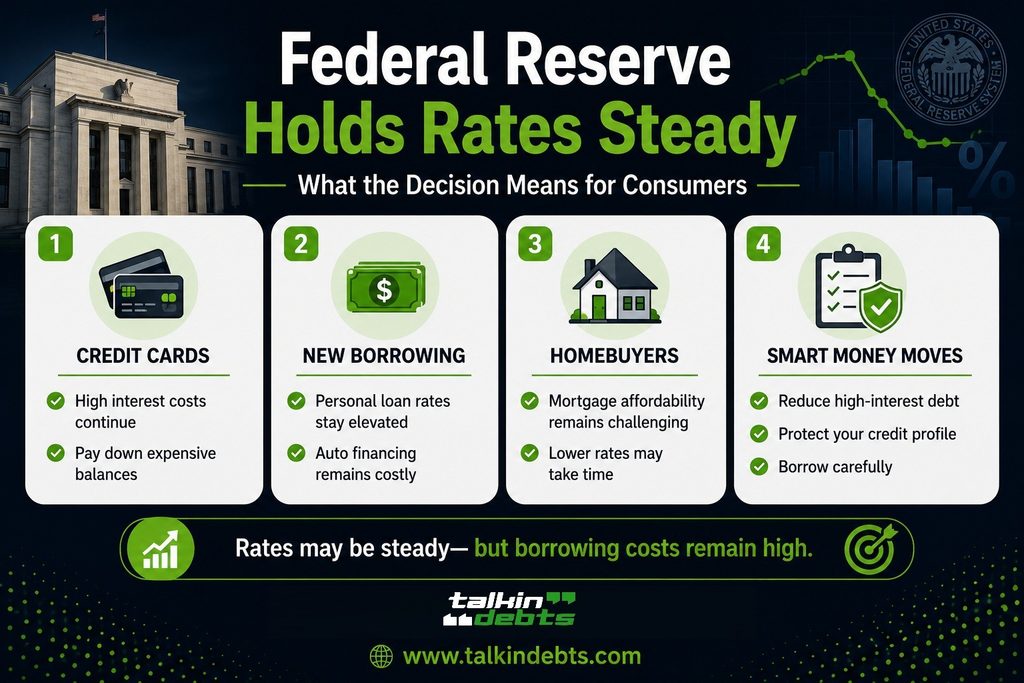
What the Decision Means for Consumers
For most Americans, the Federal Reserve’s decision means the financial environment remains largely unchanged.
Consumers carrying credit card balances are likely to continue facing high interest charges. Borrowers seeking new personal loans, auto loans, or other forms of financing should expect rates to remain relatively elevated. Homebuyers may continue encountering affordability challenges as mortgage rates stay above recent historical averages.
Financial experts recommend that consumers focus on reducing high-interest debt where possible, maintaining strong credit profiles, and carefully evaluating borrowing decisions during the current rate environment.
While many households are hoping for lower borrowing costs in the future, the Fed’s latest decision suggests policymakers are prioritizing inflation control and economic stability before making significant changes to interest rates.
As investors, businesses, and consumers await future policy decisions, one message from the Federal Reserve remains clear: interest rates may no longer be rising, but the era of higher borrowing costs is not yet over.