
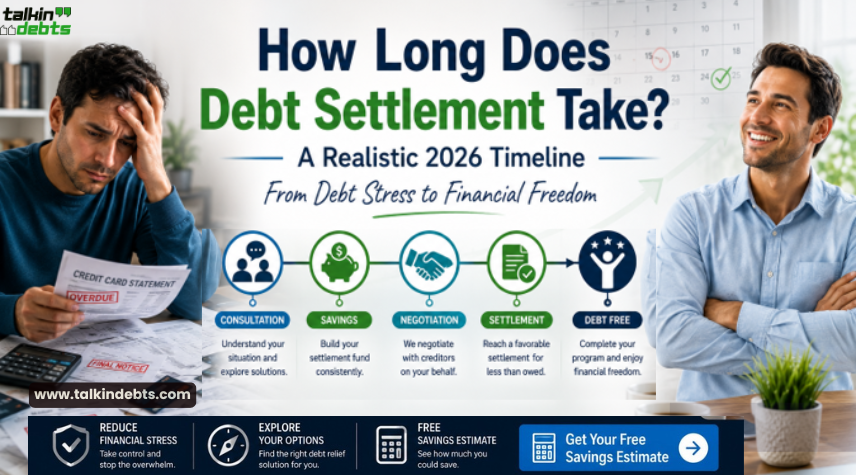
How Long Does Debt Settlement Take? A Realistic 2026 Timeline
Affiliate Disclosure: This post contains affiliate links. We may earn a commission at no extra cost to you. Disclosure Policy
If you’re struggling with debt, one of the first questions you may ask is: How long does debt settlement take?
The answer depends on several factors, including how much debt you owe, your ability to save money for settlements, the number of creditors involved, and the debt relief strategy you choose. While many companies advertise fast results, the reality is that debt settlement is a process that requires patience and planning.
Understanding the typical debt settlement timeline can help reduce uncertainty and set realistic expectations before you begin. In this guide, we’ll walk through each stage of the debt settlement process and explain what you can expect in 2026.
What Is Debt Settlement?
Debt settlement is a debt relief strategy where creditors agree to accept less than the full amount owed as payment in full. Instead of repaying 100% of your debt, you negotiate a reduced payoff amount.
Many consumers choose debt settlement when:
- Credit card debt has become unmanageable
- Minimum payments are no longer affordable
- They want an alternative to bankruptcy
- They need a structured plan to resolve unsecured debts
Professional debt settlement companies, such as CuraDebt, often negotiate on behalf of consumers and help manage the process from start to finish.
The Average Debt Settlement Timeline in 2026
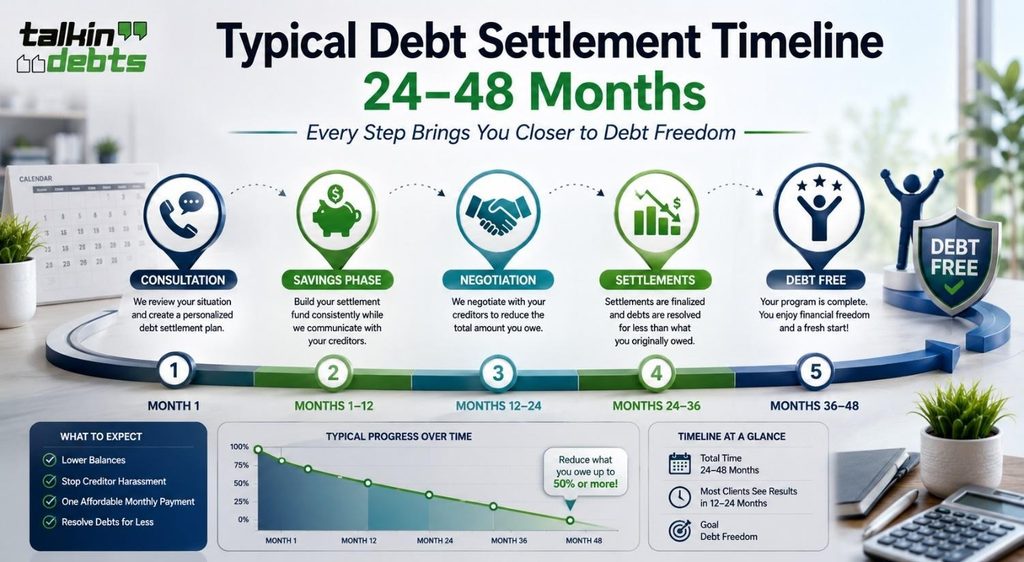
For most consumers, debt settlement takes between 24 and 48 months.
However, this is only an average. Some accounts may be settled within a few months, while larger debt situations can take longer.
Here’s a realistic breakdown of the timeline:
| Stage | Typical Timeframe |
| Initial Consultation | 1–3 Days |
| Program Enrollment | 1–2 Weeks |
| Savings Phase | 3–12 Months |
| First Settlement Offers | 4–12 Months |
| Multiple Account Settlements | 12–36 Months |
| Program Completion | 24–48 Months |
Let’s examine each stage in more detail.
Stage 1: Initial Debt Evaluation (1–3 Days)
The process typically begins with a free consultation.
During this stage, a debt specialist reviews:
- Total debt balances
- Monthly income
- Current expenses
- Creditor information
- Financial hardship circumstances
The goal is to determine whether debt settlement is a suitable solution.
A reputable provider will explain all available options, including debt management plans, debt consolidation, and bankruptcy alternatives.
What Happens During This Stage?
You may be asked to provide:
- Recent statements
- Income documentation
- Information about creditors
- Household budget details
Most evaluations can be completed within a few days.
Stage 2: Program Enrollment (1–2 Weeks)
Once you decide to move forward, the formal enrollment process begins.
This stage includes:
- Reviewing program terms
- Setting up a dedicated settlement account
- Establishing monthly contributions
- Signing required documents
The dedicated account is typically used to accumulate funds that will later be used to negotiate settlements.
Enrollment is generally completed within one or two weeks.
Stage 3: Building Settlement Funds (3–12 Months)
This is often the longest phase of the debt settlement timeline.

Before creditors agree to settle, there must usually be enough funds available to make a realistic settlement offer.
During this period:
- Monthly deposits are made into the settlement account
- Account balances continue to be monitored
- Negotiation opportunities are evaluated
The amount of time required depends largely on:
Total Debt Amount
Someone with $10,000 in debt may accumulate settlement funds much faster than someone with $50,000 or more.
Monthly Savings Ability
Consumers who can contribute larger monthly amounts generally reach settlement milestones sooner.
Number of Creditors
More creditors often mean additional negotiations and a longer overall timeline.
Stage 4: Negotiations Begin (4–12 Months)
Once sufficient funds are available, negotiations can begin.
This is where experienced debt settlement professionals can make a significant difference.
Negotiators work to:
- Contact creditors
- Present hardship situations
- Discuss settlement opportunities
- Seek reduced payoff amounts
Not every creditor responds at the same pace.
Some may settle quickly, while others require multiple negotiation attempts.
Can Settlements Happen Earlier?
Yes.
In certain cases, creditors may accept offers within the first few months of enrollment.
However, consumers should avoid expecting immediate results.
Debt settlement is typically a gradual process rather than an overnight solution.

Stage 5: Settling Multiple Accounts (12–36 Months)
Most people have more than one debt account.
Because of this, settlements are usually completed one account at a time.
A common progression may look like this:
Year 1
- Initial settlements begin
- Smaller balances may be resolved first
Year 2
- Additional creditor negotiations
- Larger balances addressed
Year 3
- Remaining accounts settled
- Final obligations resolved
The exact sequence depends on creditor policies, settlement opportunities, and available funds.
Stage 6: Program Completion (24–48 Months)
Once all enrolled debts have been successfully settled and paid, the program is complete.
At this point:
- Outstanding settlement obligations are resolved
- Debt balances are eliminated according to settlement agreements
- Consumers can focus on rebuilding their financial future
Many people report significant financial relief after completing the process because they finally have a structured path out of overwhelming debt.
Factors That Affect How Long Debt Settlement Takes
Every debt situation is different.
Several factors can accelerate or extend the process.
1. Total Debt Balance
Larger debt loads typically require more time because additional settlement funds must be accumulated.
2. Monthly Program Contributions
Higher monthly contributions can shorten the timeline considerably.
3. Number of Accounts
Managing ten accounts naturally takes longer than settling two or three.
4. Creditor Cooperation
Some creditors negotiate more readily than others.
Response times vary significantly across lenders.
5. Financial Hardship Circumstances
Demonstrating genuine financial hardship may improve negotiation opportunities in certain situations.
Does Debt Settlement Hurt Your Credit?
One concern many consumers have is how debt settlement affects credit scores.
The answer is that debt settlement can impact your credit profile, particularly during the settlement process.
However, many individuals who pursue settlement are already experiencing financial hardship and missed payments.
Once debts are resolved, consumers can begin rebuilding credit through responsible financial habits, timely payments, and reduced debt burdens.
Debt Settlement vs. Bankruptcy Timeline
Some consumers compare debt settlement with bankruptcy when evaluating debt relief options.
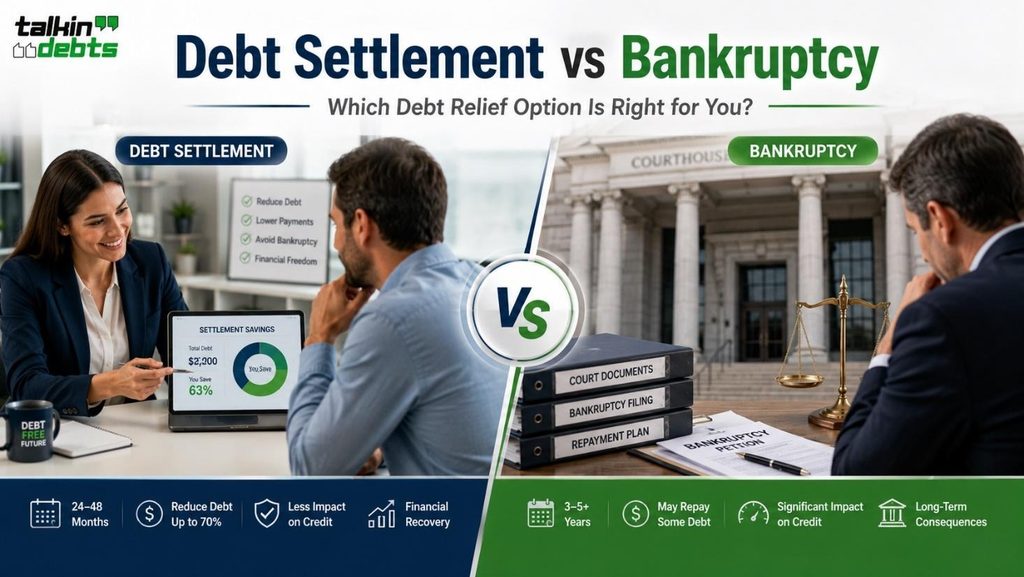
Debt Settlement
- Usually 24–48 months
- May reduce total debt owed
- Avoids bankruptcy filing
Chapter 7 Bankruptcy
- Often completed within 4–6 months
- Remains on credit reports for years
- Public court process
Chapter 13 Bankruptcy
- Typically 3–5 years
- Court-supervised repayment plan
- Long-term commitment
Choosing the right solution depends on individual financial circumstances and long-term goals.
How CuraDebt’s Process Works
CuraDebt has helped consumers explore debt relief options for more than two decades.
The typical CuraDebt process includes:
- Free debt evaluation
- Financial review and strategy discussion
- Program enrollment if appropriate
- Dedicated account setup
- Creditor negotiations
- Settlement approvals
- Debt resolution and completion
One advantage of working with experienced professionals is having guidance throughout the negotiation process and access to specialists who understand creditor settlement practices.
Is Debt Settlement Worth the Wait?
For many consumers, the answer is yes.
While debt settlement requires patience, the potential benefits may include:
- Reduced debt balances
- Lower overall repayment costs
- Structured debt resolution
- Bankruptcy avoidance
- Improved financial stability
The key is maintaining realistic expectations and understanding that meaningful debt relief takes time.

Start Exploring Your Debt Relief Options
Understanding the debt settlement timeline helps eliminate one of the biggest concerns people have when considering debt relief.
While debt settlement is not an instant solution, it can provide a structured path toward becoming debt-free. Most consumers complete the process within two to four years, with progress occurring along the way as accounts are settled.
If you’re wondering whether debt settlement is the right fit for your situation, consider speaking with a debt specialist who can review your finances and explain your options.
Ready to explore debt relief? Get a free consultation with CuraDebt and learn what a realistic debt settlement timeline could look like for your unique situation.
👉 Book Your Free CuraDebt Consultation Today and Get a Personalized Debt Relief Plan.
Frequently Asked Questions
How long does debt settlement usually take?
Most debt settlement programs take between 24 and 48 months to complete, although some accounts may be settled sooner.
Can debt settlement be completed in one year?
In certain situations, yes. Smaller debt balances and larger monthly contributions can accelerate the process.
Why does debt settlement take so long?
Time is often needed to accumulate settlement funds and negotiate agreements with multiple creditors.
Will all creditors settle?
Not every creditor approaches settlement negotiations the same way. Results vary based on creditor policies and individual circumstances.
Can I negotiate debt settlements myself?
Yes, consumers can negotiate directly with creditors. However, many choose professional assistance due to the complexity of negotiations and settlement management.