
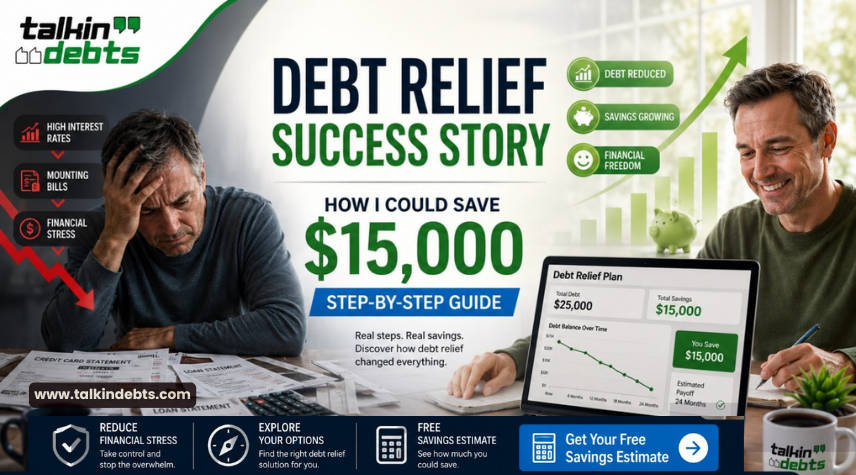
Debt Relief Success Story: How I Could Save $15,000 Using Debt Relief (Step-by-Step)
Affiliate Disclosure: This post contains affiliate links. We may earn a commission at no extra cost to you. Disclosure Policy
Have you ever looked at your credit card balances, personal loans, and monthly bills and wondered if you’ll ever catch up?
If you’re feeling overwhelmed by debt, you’re not alone. Millions of people struggle with rising interest rates, late fees, and minimum payments that barely reduce the balance. It can feel like every paycheck disappears before you even have a chance to breathe.
This debt relief success story walks through a realistic example of how someone could potentially save $15,000 by choosing the right debt relief program. While every financial situation is different and results vary, understanding how debt relief works can help you make an informed decision about your own finances.
Rather than focusing on fear, this guide explains the process step by step, what to expect, and when debt relief might be the right solution.
Get a personalized estimate of how much you could save with a free debt relief consultation:
👉 Get Your Free Savings Estimate

Meet Sarah: A Realistic Debt Relief Success Story
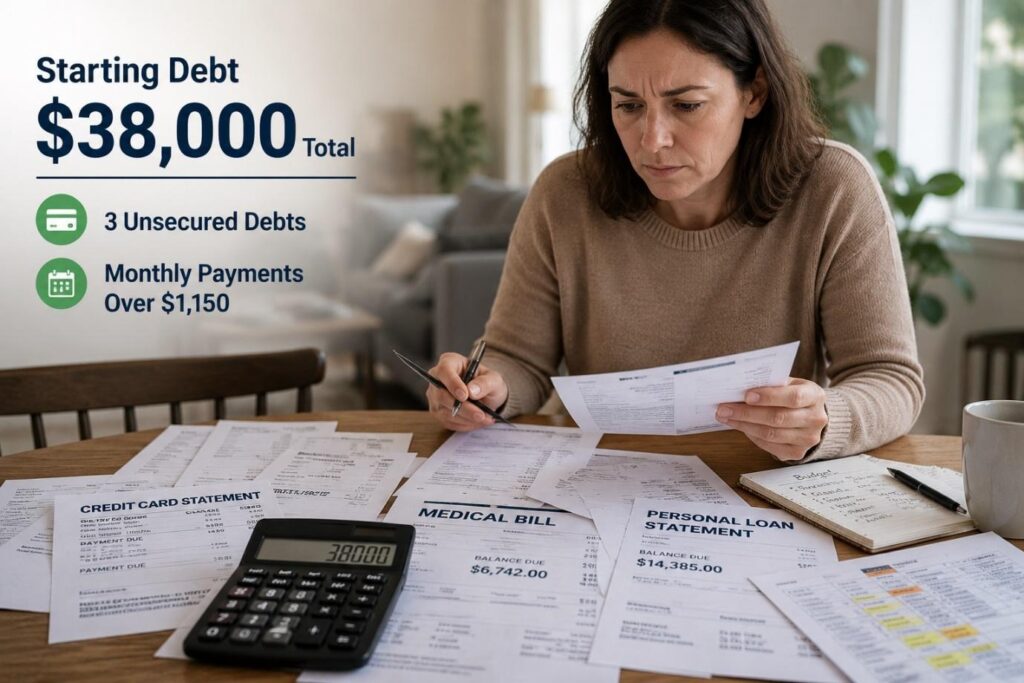
To understand how debt relief works, let’s look at a fictional—but realistic—example.
Sarah is 38 years old and works full-time. After several unexpected medical expenses and relying on credit cards during a period of reduced income, she accumulated significant unsecured debt.
Her financial situation looked like this:
- Credit Card #1: $18,000
- Credit Card #2: $11,500
- Personal Loan: $8,500
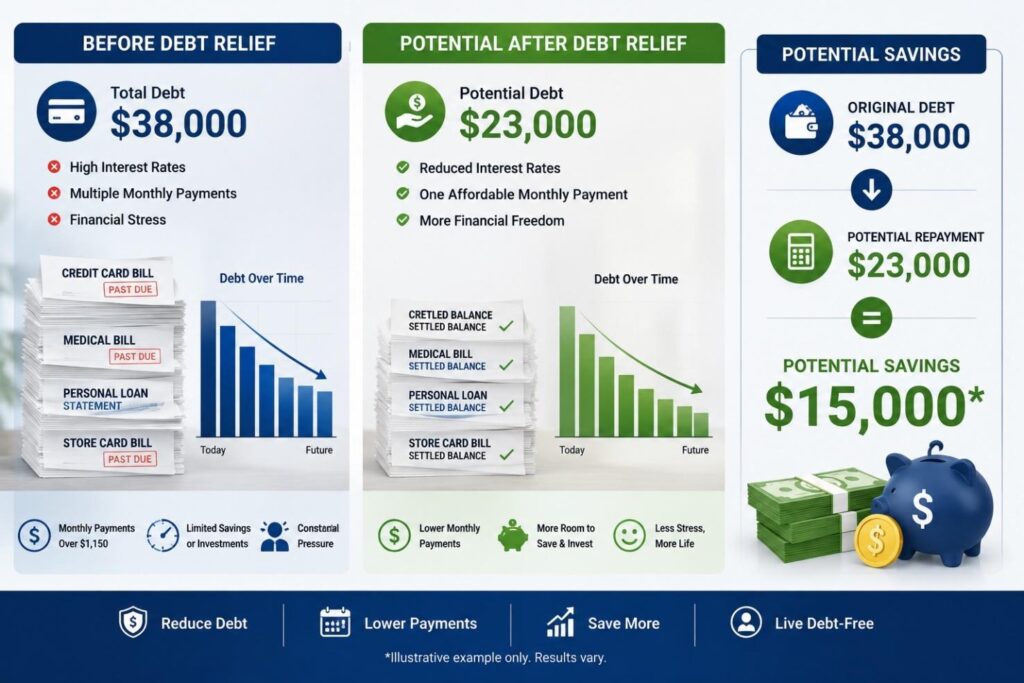
Total unsecured debt: $38,000
Monthly minimum payments totaled over $1,150, yet most of the money went toward interest rather than reducing the balances.
Sarah wasn’t missing payments yet, but she knew she couldn’t continue like this for another five to seven years.
She began researching debt relief options.
Step 1: Understanding the Real Cost of Debt
At first, Sarah assumed paying the minimum amount every month was the safest option.
Then she calculated:
- Total interest over several years
- Late payment risks
- Credit utilization impact
- Financial stress
She realized she could end up paying well over $50,000 on a debt that originally totaled $38,000.
That was the moment she decided to explore alternatives.
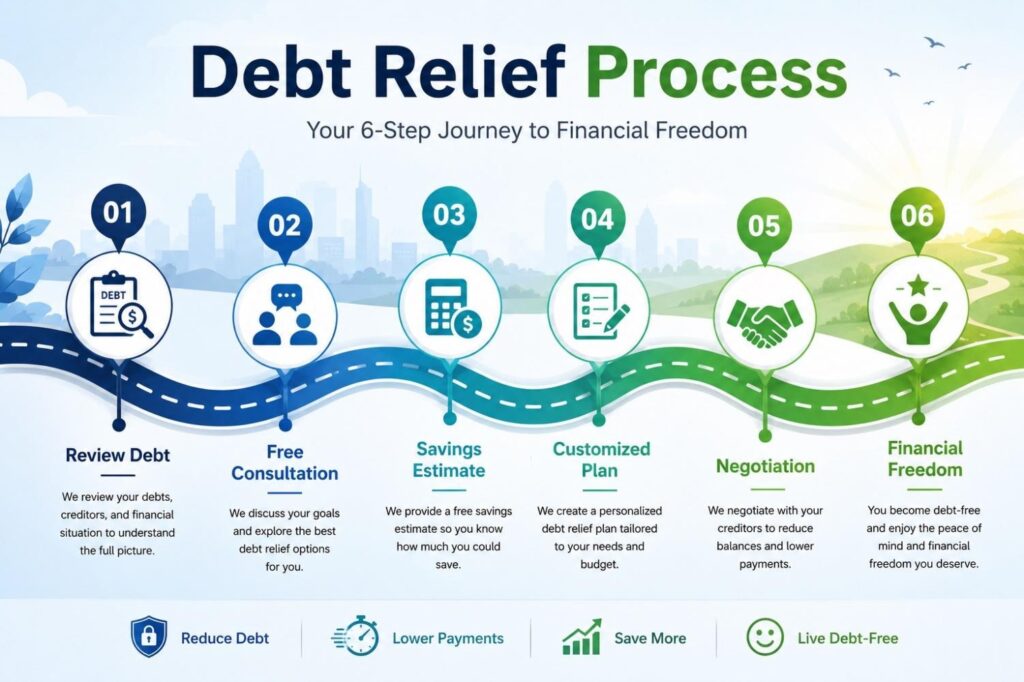
Step 2: Learning About Debt Relief
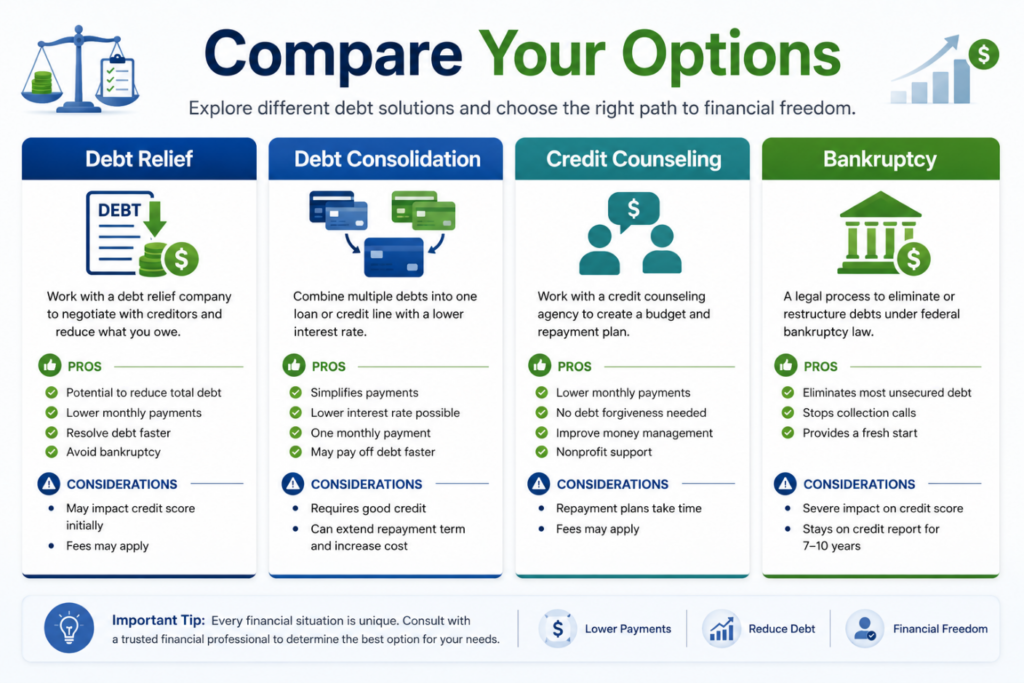
Sarah discovered several possible solutions:
- Debt consolidation loans
- Credit counseling
- Debt management plans
- Bankruptcy
- Debt settlement programs
Instead of choosing immediately, she compared each option carefully.
She wanted something that:
- Reduced total repayment
- Didn’t require perfect credit
- Provided professional negotiation support
- Fit her monthly budget
Education came before making any decision.
Step 3: Requesting a Free Debt Evaluation
Sarah scheduled a free consultation with a debt relief specialist.
During the discussion, she reviewed:
- Total debt
- Monthly income
- Household expenses
- Current creditors
- Financial goals
There was no obligation to enroll.
Instead, she received an estimate showing potential savings based on her financial situation.
Wondering what your savings could look like?
👉 Get Your Free Savings Estimate:

Step 4: Building a Customized Debt Relief Plan
Instead of treating every debt the same, the plan focused on resolving unsecured debt strategically.
The proposed repayment amount was significantly lower than continuing to pay only minimum balances for many years.
While debt relief cannot guarantee specific outcomes, negotiated settlements may reduce the total amount repaid depending on creditor participation and individual circumstances.
Sarah appreciated that the process was customized rather than one-size-fits-all.
Step 5: Staying Committed to the Plan
The first few months required discipline.
Sarah:
- Followed her monthly budget
- Avoided taking on new unsecured debt
- Built a small emergency fund
- Maintained regular communication with her debt relief team
Gradually, progress became visible.
Instead of watching interest accumulate every month, she saw balances being resolved one by one.
Step 6: The Estimated Savings
Here’s how Sarah’s example could look.
| Original Debt | Estimated Settlement | Estimated Savings |
| $38,000 | $23,000 | $15,000 |
Again, these numbers are only an example.
Actual savings depend on:
- Creditors
- Debt type
- Account status
- Individual financial circumstances
- Program participation
Still, seeing a possible reduction of around $15,000 helped Sarah regain confidence about her financial future.
What Debt Relief Actually Does
Many people misunderstand debt relief.
A professional debt relief company generally helps by:
- Reviewing your financial situation
- Determining eligibility
- Negotiating with creditors
- Developing a structured repayment plan
- Supporting you throughout the process
Debt relief isn’t about avoiding responsibility.
It’s about finding a realistic path toward becoming debt-free.
Signs Debt Relief Might Be Right for You
You may benefit from exploring debt relief if:
- You’re struggling with multiple credit card balances.
- Your monthly payments consume most of your income.
- Interest charges keep growing.
- You’re considering missing payments.
- You don’t qualify for affordable consolidation loans.
- You’re experiencing ongoing financial stress.
A free consultation can help determine whether debt relief fits your situation.
CuraDebt vs Other Debt Solutions
Choosing the right solution depends on your financial goals.
| Option | Advantages | Potential Drawbacks |
| CuraDebt Debt Relief | Negotiation support, customized solutions, free consultation, potential debt reduction depending on circumstances | Results vary and depend on creditor participation |
| Debt Consolidation Loan | One monthly payment | Requires stronger credit and may not reduce total debt |
| Credit Counseling | Budget assistance and education | Usually doesn’t reduce principal balances |
| Debt Management Plan | Simplified payments | Full balances generally still need to be repaid |
| Bankruptcy | Legal debt relief in certain cases | Significant legal and long-term credit implications |
Debt relief is not the right choice for everyone, which is why professional evaluation is important before making any decision.
Ready to see your potential savings?
👉 Get Your Free Savings Estimate:
Lessons from This Debt Relief Success Story
Sarah’s story highlights several important lessons:
- Ignoring debt rarely improves the situation.
- Understanding all available options leads to better decisions.
- Professional guidance can simplify a complicated process.
- Small monthly progress builds long-term financial confidence.
- Every person’s debt journey is unique.
Most importantly, asking for help is often the first step toward financial recovery.
Final Thoughts
Financial stress can affect every area of life—from sleep and relationships to career and overall well-being. If your debt feels overwhelming, remember that you have options.
Whether debt relief is the right solution depends on your personal circumstances, but learning about your choices costs nothing.

A free consultation can provide clarity, estimated savings, and a better understanding of the next steps available to you.
Start your free session today—no obligation.
👉 Get Your Free Savings Estimate
Frequently Asked Questions
How long does debt relief take?
Program length varies depending on your debt amount, monthly payment ability, and negotiations with creditors.
Does debt relief affect credit?
Debt relief may impact your credit profile. However, many people choose it after comparing the long-term cost of continuing with unmanageable debt. Discuss potential impacts with a qualified advisor before enrolling.
Is there a cost for an initial consultation?
Many providers, including CuraDebt, offer a free initial consultation so you can understand your available options.
Will debt relief eliminate all debt?
No. Debt relief programs are designed to help resolve eligible unsecured debts, but not every debt qualifies.
Can debt relief really reduce what I owe?
In some situations, negotiated settlements may reduce the amount repaid. Outcomes depend on creditors and individual circumstances.
.