
Back-to-School Costs Push More Families Toward Credit Cards and BNPL in 2026
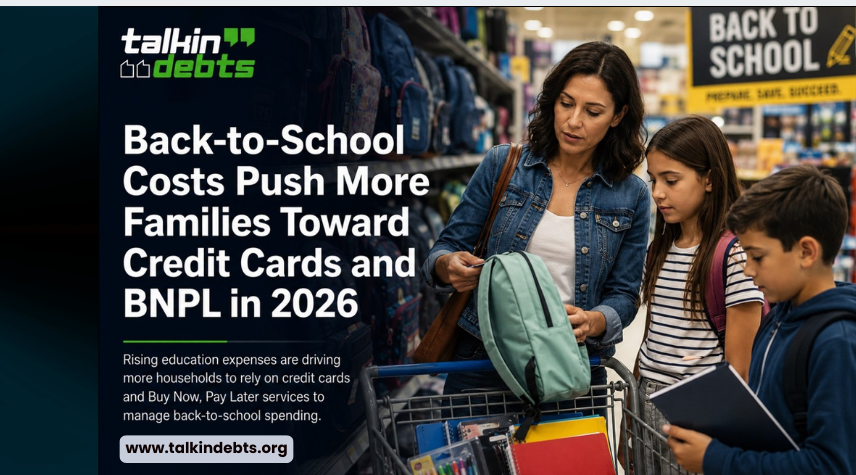
Aug. 2026 — U.S. retailers are reporting strong early back-to-school shopping activity as more families turn to credit cards and Buy Now, Pay Later (BNPL) financing to manage rising education-related expenses, highlighting the continued pressure higher living costs are placing on household budgets despite moderating inflation.
Rising Education Costs Reshape Household Spending
Early retail trends indicate that spending on school supplies, clothing, laptops, calculators, backpacks, and other classroom essentials remains resilient, but payment patterns are shifting. Rather than paying upfront, many consumers are spreading purchases across credit cards and installment payment plans to preserve cash flow amid higher housing, grocery, and utility costs. Industry analysts say the growing reliance on short-term financing reflects changing consumer behavior as families balance seasonal expenses with existing financial commitments.
Lenders Monitor Changing Consumer Credit Patterns
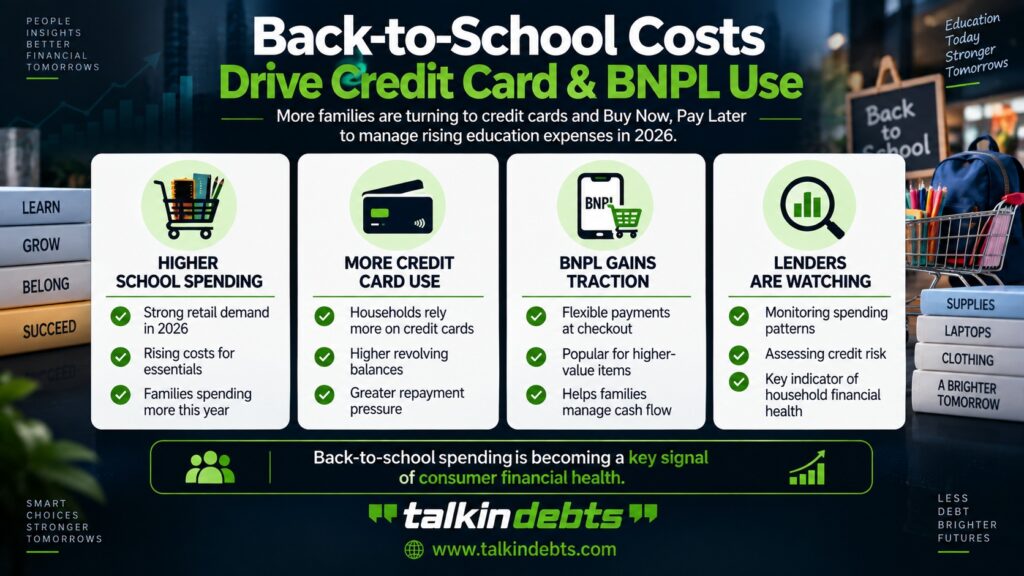
The trend is drawing increased attention from banks, payment providers, and consumer lenders, many of which are already monitoring higher revolving credit balances and evolving repayment patterns following recent quarterly earnings reports. While lenders continue to describe overall consumer credit performance as stable, the back-to-school season is expected to provide an important test of household spending resilience during the second half of 2026, particularly as institutions refine risk strategies in response to changing borrowing behavior.
Families Prioritize Essential School Purchases
Retailers across the country say shoppers are increasingly prioritizing essential purchases while delaying discretionary spending. Families are focusing first on mandatory classroom supplies, school uniforms, footwear, laptops, tablets, and educational technology before considering optional items.
Retailers Expand Early Promotions
Many retailers have also expanded promotional campaigns earlier than usual, encouraging parents to spread purchases over several weeks instead of concentrating spending closer to the start of the school year.
Payment Flexibility Gains Importance
Payment flexibility has become a central feature of this year’s shopping season. Large retailers continue expanding partnerships with Buy Now, Pay Later providers, allowing customers to divide purchases into smaller installments at checkout.
BNPL Gains Traction for Higher-Value Purchases
Analysts say these payment options are becoming particularly popular for higher-value items such as computers, tablets, graphing calculators, and dormitory essentials, where upfront costs can quickly strain household budgets.
Common Purchases Financed Through BNPL
- Computers and laptops
- Tablets
- Educational technology
- Graphing calculators
- Dormitory essentials
- Other higher-value school-related purchases
Banks Watch Seasonal Credit Card Spending
Banks are also closely watching credit card spending during the seasonal shopping period. Consumer credit specialists note that while card usage typically increases during major retail events, the current environment differs from previous years because many households are already managing elevated borrowing costs.
Higher Interest Rates Increase Repayment Pressure
Higher interest rates have increased the cost of carrying revolving balances, making repayment behavior a key indicator for lenders monitoring portfolio performance.
Financial Institutions Increase Credit Risk Monitoring
Executives speaking during recent second-quarter earnings presentations described consumer spending as generally resilient but acknowledged that credit performance remains under close observation. Several institutions noted that customers continue making purchases, although payment behavior is receiving greater scrutiny as economic conditions remain mixed.
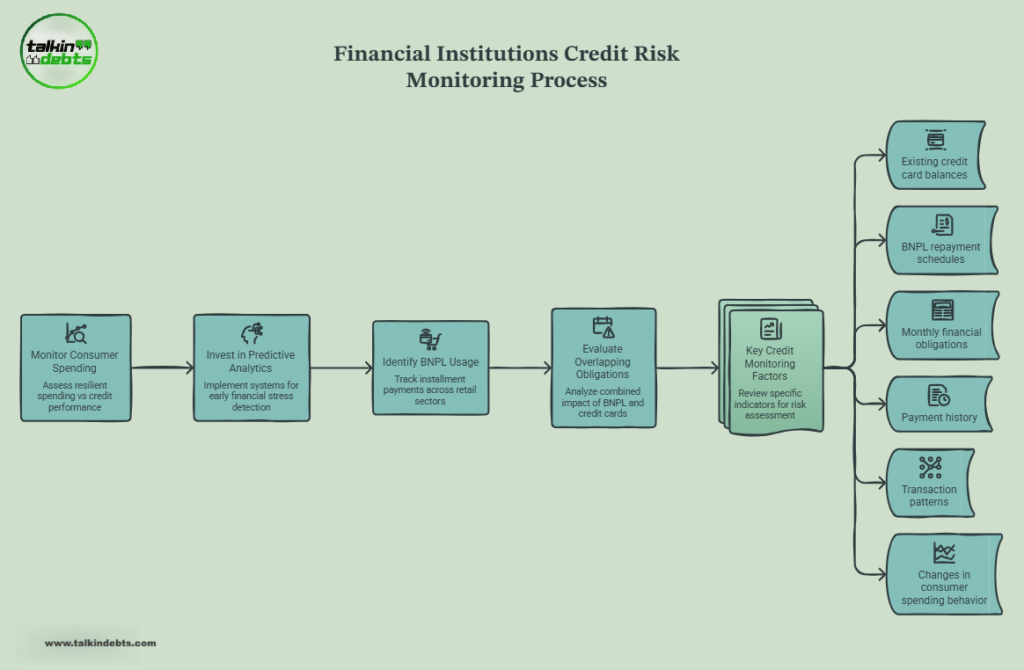
Predictive Analytics Support Early Risk Detection
Financial institutions have responded by increasing investment in predictive analytics and portfolio monitoring systems designed to identify early signs of financial stress before accounts become seriously delinquent.
BNPL Reshapes the Seasonal Lending Landscape
Industry observers say the growing popularity of Buy Now, Pay Later services is reshaping the seasonal lending landscape. Once used primarily for online purchases, installment payment options are now widely available across department stores, office supply retailers, electronics chains, and e-commerce platforms.
Consumers Use Multiple Financing Options
Their convenience has encouraged many consumers to finance multiple purchases simultaneously, allowing them to manage immediate cash flow without relying exclusively on traditional credit cards.
Overlapping Payments Create New Monitoring Challenges
However, analysts caution that the increasing use of multiple financing options can make household debt more difficult to monitor.
Multiple Repayment Schedules Can Increase Monthly Obligations
While individual BNPL transactions may appear manageable, overlapping repayment schedules combined with existing credit card balances can increase monthly financial obligations. Consumer finance specialists say lenders are paying closer attention to these repayment patterns as alternative financing continues to expand across the retail sector.
Key Credit Monitoring Factors
- Existing credit card balances
- BNPL repayment schedules
- Monthly financial obligations
- Payment history
- Transaction patterns
- Changes in consumer spending behavior
Lenders Adapt Risk Strategies to Changing Borrowing Behavior
The shift is also influencing lender risk strategy. Banks and consumer finance companies are increasingly relying on behavioral data, payment history, and transaction patterns to assess credit quality throughout the customer lifecycle.
Real-Time Data Supports Portfolio Management
Rather than focusing solely on traditional credit scores, many institutions now incorporate real-time account activity into portfolio management decisions, allowing them to identify potential repayment risks earlier than in previous lending cycles.
Collection Agencies Monitor Seasonal Borrowing Trends
Collection agencies and debt buyers are also monitoring seasonal borrowing trends. Historically, periods of elevated consumer spending are often followed by changes in delinquency patterns several months later, particularly if economic conditions weaken or household expenses continue rising.
Early Intervention May Support Repayment Outcomes
Industry participants say early monitoring of payment performance allows lenders and collection firms to engage customers sooner, improving repayment outcomes while reducing the likelihood of long-term financial hardship.
Retailers Balance Consumer Demand With Affordability
Retail economists expect overall back-to-school sales to remain strong throughout August despite affordability concerns. Continued employment growth and steady consumer demand are supporting spending, while retailers are using targeted discounts, loyalty rewards, and flexible payment solutions to attract budget-conscious shoppers.
Consumers Become More Price-Conscious
Many merchants report that consumers are comparing prices more carefully than in previous years, with online price comparison tools and mobile shopping applications playing an increasingly important role in purchasing decisions.
Technology Spending Remains Strong
Technology retailers are expected to remain among the biggest beneficiaries of the back-to-school shopping season as schools continue integrating digital learning into classrooms.
Demand for Educational Technology Continues
Demand for laptops, tablets, headphones, printers, and educational software remains robust, although many families are financing these purchases rather than paying the full cost upfront.
Technology Categories Drawing Consumer Spending
- Laptops
- Tablets
- Headphones
- Printers
- Educational software
Industry analysts say the combination of higher device prices and expanding financing options has accelerated the adoption of installment payment services across the education sector.
Autumn Credit Data Could Reveal Longer-Term Trends
Financial institutions will continue monitoring repayment performance throughout the autumn as seasonal spending begins appearing in consumer credit data.
September and October May Provide Additional Insights
Analysts believe repayment trends during September and October will provide a clearer picture of whether increased borrowing represents temporary seasonal demand or a broader shift in household financial behavior.
Potential Impact on Lending Decisions
These insights are expected to influence lending strategies, credit risk assessments, and portfolio management decisions heading into the final quarter of the year.
Back-to-School Spending Becomes a Consumer Health Indicator
For lenders, payment providers, retailers, and debt buyers, this year’s back-to-school season has become more than a retail event—it has emerged as an important indicator of consumer financial health.
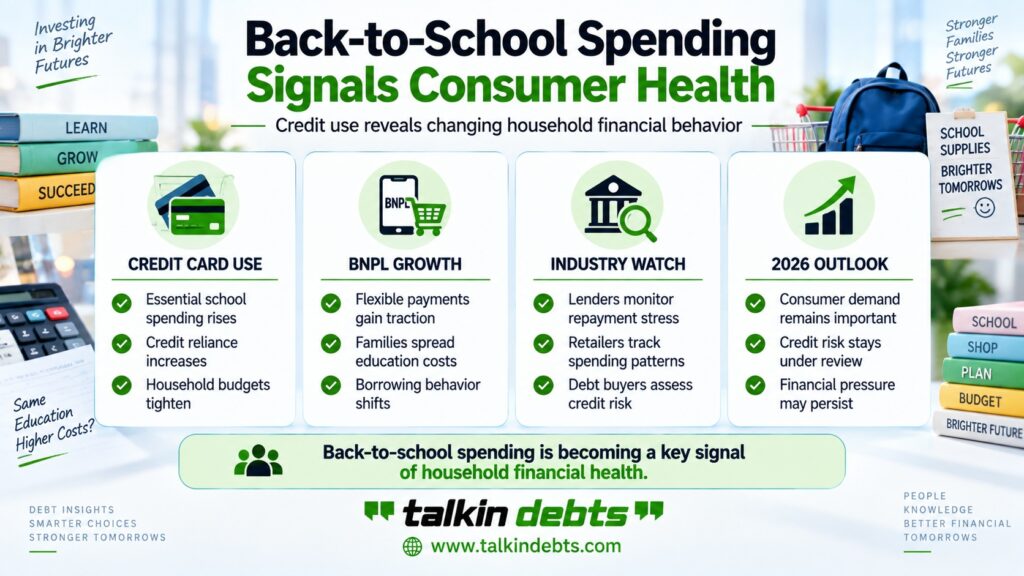
Credit Cards and BNPL Reflect Changing Household Behavior
The growing reliance on credit cards and Buy Now, Pay Later financing demonstrates how households are adapting to higher living costs while continuing to prioritize essential education-related spending.
Financial Industry Watches the Remainder of 2026
As the shopping season reaches its peak, industry participants will be watching closely to determine whether strong consumer demand can continue without placing additional pressure on household finances.
Potential Implications for the Credit Industry
The outcome is likely to shape lending decisions, retail strategies, and credit risk management throughout the remainder of 2026, making this year’s back-to-school season one of the most closely watched by financial institutions since borrowing costs began climbing in recent years.